
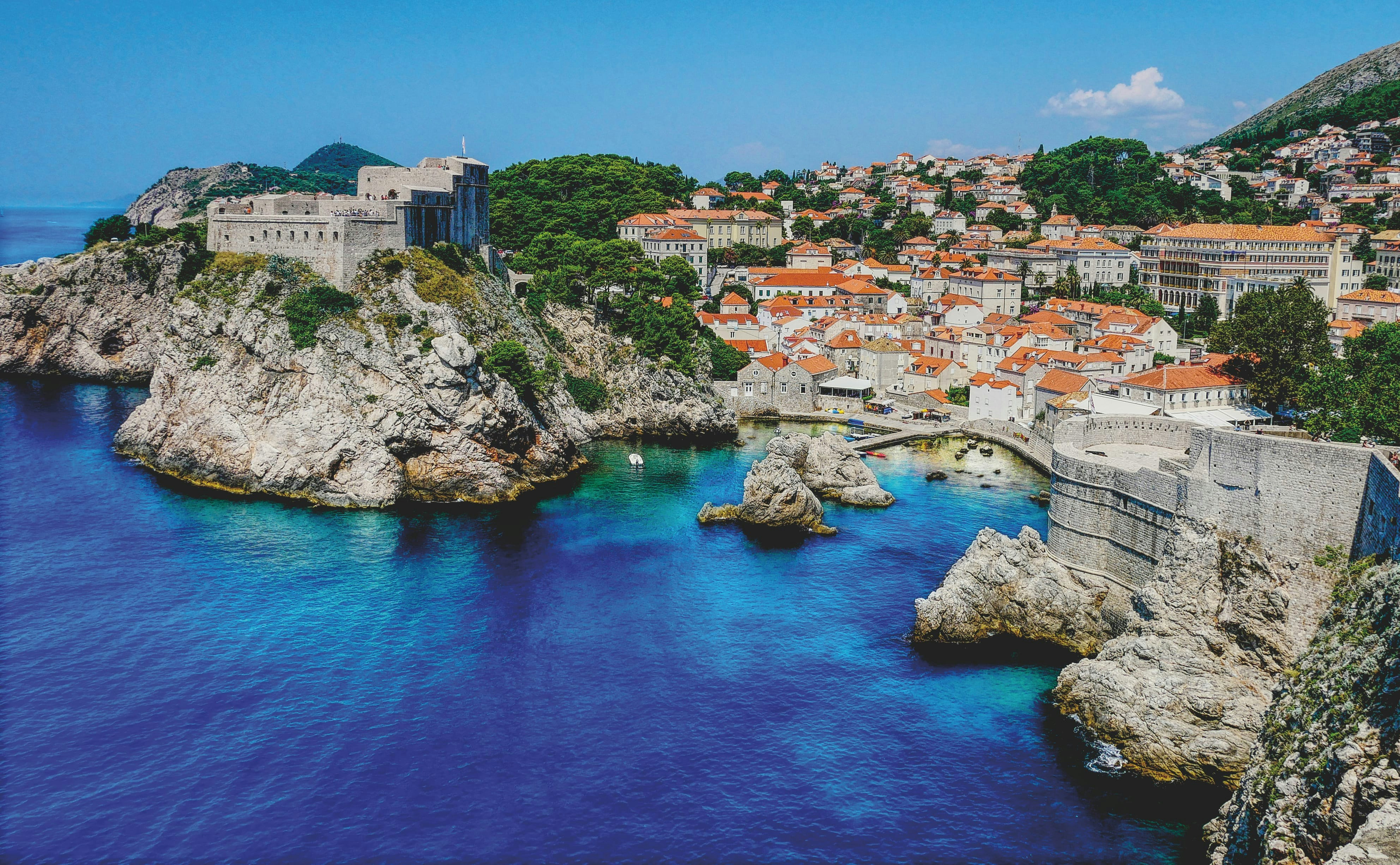
Discover Croatia, Slovenia and the Adriatic Coast
Dive into beauty and history as you explore the medieval cities, tranquil lakes, stunning coastlines and quaint villages of Croatia and Slovenia. Explore Ljubljana, Slovenia’s romantic capital city. Discover the richness of Opatija, the “Riviera of Croatia” and an Istrian gem. Explore Plitvice Lakes National Park by foot and by boat, a place where waterfalls cascade down sheer cliffs connecting sixteen pristine lakes. Step back into Roman times in Split’s Diocletian’s Palace. Enjoy visits to local restaurants, wineries and artisanal food producers. Take in the white stone buildings and massive city walls of the ancient harbor town of Dubrovnik. Explore fascinating Zagreb. Delight in the old-world charm found in this sunny Adriatic paradise.
Dive into beauty and history as you explore the medieval cities, tranquil lakes, stunning coastlines and quaint villages of Croatia and Slovenia. Explore Ljubljana, Slovenia’s romantic capital city. Discover the richness of Opatija, the “Riviera of Croatia” and an Istrian gem. Explore Plitvice Lakes National Park by foot and by boat, a place where waterfalls cascade down sheer cliffs connecting sixteen pristine lakes. Step back into Roman times in Split’s Diocletian’s Palace. Enjoy visits to local restaurants, wineries and artisanal food producers. Take in the white stone buildings and massive city walls of the ancient harbor town of Dubrovnik. Explore fascinating Zagreb. Delight in the old-world charm found in this sunny Adriatic paradise.
Highlights
- Often nicknamed the "City of Vine and Wine", uncharted Ljubljana is a picturesque city well known for the Dragon Bridge, housing the world's oldest wooden wheel with an axel, and the Central Market. The most prominent sight is the Castle built on an old Roman stronghold with breathtaking views over the city.
- Ljubljana Castle is a castle complex standing on Castle Hill above the downtown of Ljubljana, the capital of Slovenia. It is a key element of the Ljubljana skyline. Originally a Medieval fortress, probably built in the 11th century and rebuilt in the 12th century, it acquired its present outline with an almost complete overhaul in the 15th century, whereas the majority of the buildings date to the 16th and 17th centuries. At first a defense structure and since the first half of the 14th century the seat of the lords of Carniola, it was since the early 19th century used as a penitentiary, then in the first half of the 20th century as a residential complex and at present time as a tourist attraction and a major cultural venue.
- Set in an Alpine backdrop, the lake adjoins the town of Bled. With a maximum depth of 100 ft, the lake is a mix of glacial and tectonic origins. Surrounding Bled Island, known for its pilgrimage church, Lake Bled is popular with rowers.
- Located on the coast of the largest peninsula in the Adriatic, this harbour town's history was dominated by shipbuilding and monasteries. Once a favorite of the Austrian aristocracy, it was promoted as a health resort in the 19th century. Elegant promenades and parks weave their way between spacious villas and verdant public spaces.
- Shared by Croatia, Slovenia, and Italy, the peninsula of Istria is situated in the Adriatic Sea. Attached to the western corner of Croatia, this area of land has been a tourist spot since ancient times. Frequented by Roman Emperors as well as the Habsburgs of the Austro-Hungarian Empire, Istria is rich with history and diverse influences. Some caves in this area even hold remains from the Stone Age! Almost 90% of the landmass lies in Croatia, which the country calls Istria County.
- Seafood is very popular in Istria, given its close proximity to the water. As a result of the peninsula possessing a long history, a lot of different cultures have left their marks on the area. One of the most prominent influences on Istria is Italy, which has definitely spread into the cuisine. Each section of Croatia practices their own culinary traditions, so what is eaten in Istria may not be found in Dalmatia. Enjoy the culinary delicacies of the Istrian Peninsula during dinner at a farm to table restaurant, where you’ll also be able to try regional wines!
- The largest national park in Croatia is characterized by its 16 turquoise colored lakes inter-connected by a series of waterfalls. Its multiple trails in the woodland setting, which include steps, inclines, and wooden planks, also allows visitors to spot wildlife. The park is considered the country's top tourist attraction. Visitors unable to walk have an option of a shorter tour via shuttle.
- Split is one of the oldest cities in the region and is known for Diocletian’s Palace, a famous ancient fortress. One of Croatia’s UNESCO World Heritage Sites, Emperor Diocletian chose the palace to be his retirement home because of the incomparable beauty of Split.
- Forming the center of Old Split, this unique imperial palace is extraordinarily well preserved from the 3-4 centuries A.D. Called the city's first resident, the Roman Emperor Diocletian built this structure as his retirement home in a location close to his birthplace and an important Roman center. Today, walking the labyrinth of streets means exploring the heart of the city.
- A group of refugees from Epidaurum (today’s Cavtat) founded Dubrovnik in the first half of the 7th century. The city was under the protection of the Byzantine Empire through the 12th century. From 1205-1358, Dubrovnik fell under the sovereignty of Venice. Dubrovnik ruled itself as a free state between the 14th century and 1808 as the Republic of Dubrovnik. It flourished in the 15th and 16th centuries and became the chief shipping rival to Venice. A devastating earthquake in 1667 killed over 5,000 citizens and marked the beginning of the decline for the Republic. The Republic officially met its final demise in 1808 after Napoleon’s armies conquered it and Marshal Marmont abolished the Republic and integrated it into the Illyrian provinces. Since 1808, Dubrovnik has fallen under attack, been occupied and annexed several times, most recently as part of the second Yugoslavia (1945-1991); however, it continues to be one of the most beautiful and fascinating cities on the entire Adriatic. With its medieval walls that surround the old city, and the ancient buildings contained within, Dubrovnik is a UNESCO World Heritage site unlike any other.
- In the afternoon of Neo Day 9, it's your choice! Ascend Mount Srd by cablecar for breathtaking views of the old City of Dubrovnik, the crystal-clear Adriatic Sea, and the islands -OR- receive a ticket to access the walls that contain the old city of Dubrovnik and gain a different perspective on this remarkable place. Cable Car Ride Activity Level 2: Included cable car ticket (roundtrip). Ticket can be used throughout the day of purchase. Tour Manager will escort the group after the Dubrovnik city tour. Dubrovnik City Walls Activity Level 3: Included entrance to the walls and St. Lawrence Fort. Entrance ticket can be used throughout the day of purchase. Walking distance is 1.2 miles, with uneven grounds and steps. This choice will be done during the traveler's leisure time.
- Located in the northwest of the country, Zagreb is the capital and the largest city of the Republic of Croatia. Zagreb is a city with a rich history dating from the Roman times to the present day. Zagreb is the most important transport hub in Croatia. The city is known for its diverse economy, high quality of living, museums, sporting and entertainment events.
Hotels
- Grand Plaza Hotel — Ljubljana
- Liburnia Riviera Hotels — Opatija
- Lyra Hotel — Plitvice Lakes
- Hotel Corner — Split
- Royal Hotels & Resort Ariston — Dubrovnik
- The Westin — Zagreb
Details
- Tour Operator
- Collette
- Start City
- Zagreb
- End City
- Zagreb
- Duration (Days)
- 14
- Activity Level
- Level 3
What's Included
- 20 meals included
- Inter-tour flights included
- Often nicknamed the "City of Vine and Wine", uncharted Ljubljana is a picturesque city well known for the Dragon Bridge, housing the world's oldest wooden wheel with an axel, and the Central Market. The most prominent sight is the Castle built on an old Roman stronghold with breathtaking views over the city.
- Ljubljana Castle is a castle complex standing on Castle Hill above the downtown of Ljubljana, the capital of Slovenia. It is a key element of the Ljubljana skyline. Originally a Medieval fortress, probably built in the 11th century and rebuilt in the 12th century, it acquired its present outline with an almost complete overhaul in the 15th century, whereas the majority of the buildings date to the 16th and 17th centuries. At first a defense structure and since the first half of the 14th century the seat of the lords of Carniola, it was since the early 19th century used as a penitentiary, then in the first half of the 20th century as a residential complex and at present time as a tourist attraction and a major cultural venue.
- Set in an Alpine backdrop, the lake adjoins the town of Bled. With a maximum depth of 100 ft, the lake is a mix of glacial and tectonic origins. Surrounding Bled Island, known for its pilgrimage church, Lake Bled is popular with rowers.
- Located on the coast of the largest peninsula in the Adriatic, this harbour town's history was dominated by shipbuilding and monasteries. Once a favorite of the Austrian aristocracy, it was promoted as a health resort in the 19th century. Elegant promenades and parks weave their way between spacious villas and verdant public spaces.
- Shared by Croatia, Slovenia, and Italy, the peninsula of Istria is situated in the Adriatic Sea. Attached to the western corner of Croatia, this area of land has been a tourist spot since ancient times. Frequented by Roman Emperors as well as the Habsburgs of the Austro-Hungarian Empire, Istria is rich with history and diverse influences. Some caves in this area even hold remains from the Stone Age! Almost 90% of the landmass lies in Croatia, which the country calls Istria County.
- Seafood is very popular in Istria, given its close proximity to the water. As a result of the peninsula possessing a long history, a lot of different cultures have left their marks on the area. One of the most prominent influences on Istria is Italy, which has definitely spread into the cuisine. Each section of Croatia practices their own culinary traditions, so what is eaten in Istria may not be found in Dalmatia. Enjoy the culinary delicacies of the Istrian Peninsula during dinner at a farm to table restaurant, where you’ll also be able to try regional wines!
- The largest national park in Croatia is characterized by its 16 turquoise colored lakes inter-connected by a series of waterfalls. Its multiple trails in the woodland setting, which include steps, inclines, and wooden planks, also allows visitors to spot wildlife. The park is considered the country's top tourist attraction. Visitors unable to walk have an option of a shorter tour via shuttle.
- Split is one of the oldest cities in the region and is known for Diocletian’s Palace, a famous ancient fortress. One of Croatia’s UNESCO World Heritage Sites, Emperor Diocletian chose the palace to be his retirement home because of the incomparable beauty of Split.
- Forming the center of Old Split, this unique imperial palace is extraordinarily well preserved from the 3-4 centuries A.D. Called the city's first resident, the Roman Emperor Diocletian built this structure as his retirement home in a location close to his birthplace and an important Roman center. Today, walking the labyrinth of streets means exploring the heart of the city.
- A group of refugees from Epidaurum (today’s Cavtat) founded Dubrovnik in the first half of the 7th century. The city was under the protection of the Byzantine Empire through the 12th century. From 1205-1358, Dubrovnik fell under the sovereignty of Venice. Dubrovnik ruled itself as a free state between the 14th century and 1808 as the Republic of Dubrovnik. It flourished in the 15th and 16th centuries and became the chief shipping rival to Venice. A devastating earthquake in 1667 killed over 5,000 citizens and marked the beginning of the decline for the Republic. The Republic officially met its final demise in 1808 after Napoleon’s armies conquered it and Marshal Marmont abolished the Republic and integrated it into the Illyrian provinces. Since 1808, Dubrovnik has fallen under attack, been occupied and annexed several times, most recently as part of the second Yugoslavia (1945-1991); however, it continues to be one of the most beautiful and fascinating cities on the entire Adriatic. With its medieval walls that surround the old city, and the ancient buildings contained within, Dubrovnik is a UNESCO World Heritage site unlike any other.
- In the afternoon of Neo Day 9, it's your choice! Ascend Mount Srd by cablecar for breathtaking views of the old City of Dubrovnik, the crystal-clear Adriatic Sea, and the islands -OR- receive a ticket to access the walls that contain the old city of Dubrovnik and gain a different perspective on this remarkable place. Cable Car Ride Activity Level 2: Included cable car ticket (roundtrip). Ticket can be used throughout the day of purchase. Tour Manager will escort the group after the Dubrovnik city tour. Dubrovnik City Walls Activity Level 3: Included entrance to the walls and St. Lawrence Fort. Entrance ticket can be used throughout the day of purchase. Walking distance is 1.2 miles, with uneven grounds and steps. This choice will be done during the traveler's leisure time.
- Located in the northwest of the country, Zagreb is the capital and the largest city of the Republic of Croatia. Zagreb is a city with a rich history dating from the Roman times to the present day. Zagreb is the most important transport hub in Croatia. The city is known for its diverse economy, high quality of living, museums, sporting and entertainment events.
Pricing
| Option | Price | Departure | Return |
|---|---|---|---|
| Double | USD 4,349.00 | 2026-04-30 | |
| Single | USD 5,349.00 | 2026-04-30 | |
| Triple | USD 4,149.00 | 2026-04-30 | |
| Double | USD 4,349.00 | 2026-05-07 | |
| Single | USD 5,349.00 | 2026-05-07 | |
| Triple | USD 4,149.00 | 2026-05-07 |
Itinerary
-
Day 1: Overnight Flight
Explore Croatia and the countries of the Adriatic, a region filled with ancient cities, medieval architecture, intriguing cultures with a complex recent history, rolling hills and stunning coastal scenery.
-
Day 2: Ljubljana, Slovenia
Your tour begins in Ljubljana, Slovenia,* a romantic capital city in the midst of a cultural renaissance. Get to know your fellow travelers during a welcome dinner in this fairy tale town.
-
Day 3: Ljubljana
This morning a local expert introduces you to beautiful Ljubljana. Nestled gently along the banks of the Ljubljanica River, the city is dotted with green parks, picturesque bridges, sidewalk cafes and a lively central market. See Prešeren Square, the impressive City Hall, Ljubljana University, and the many bridges that the city is known for, such as Dragon Bridge where this majestic symbol of the city is on full display representing courage and power. Enjoy some free time for lunch in this vibrant town. In the early afternoon, travel towards Lake Bled nestled between the Julian Alps. Visit the centerpiece of Lake Bled, Bled Island, by a traditional wooden boat. Continue the afternoon in one of the most picturesque places in Slovenia. Perhaps you’ll try the legendary Bled’s cream cake before you return to Ljubljana.
-
Day 4: Ljubljana - Novo Mesto - Opatija, Croatia
This morning, depart Ljubljana. Get to know more of Slovenia when you visit Novo Mesto, a small-town gem embraced by the Krka River and landscapes of gentle hills. View the town from a unique perspective as you drift along the famous river bend. Later, continue on a walking tour with your local guide. Enjoy your free time and lunch on your own. Continue to Croatia and the lovely seaside resort of Opatija, known as “Croatia’s Riviera.” This fashionable region was once the summer retreat for Roman Caesars and Habsburg monarchs. Get acquainted with this coastal town on a brief walking tour. Your evening is at leisure.
-
Day 5: Opatija - Istrian Peninsula - Opatija
Start off your day with a leisurely spent morning. Spend the afternoon discovering the richness of the Istrian Peninsula with its’ Italian and Croatian influences. Visit a local distillery, where the owners use regional plants, fruits, and herbs to produce brandies, snacks, and other treats. Discover a picture-perfect example of a hilltop Istrian town. In the late afternoon, a delightful farm-to-table dinner at a local restaurant lets you sample the regional wines and culinary delicacies of the Istrian Peninsula.
-
Day 6: Opatija - Plitvice Lakes
This morning, depart for Plitvice Lakes, one of the oldest, largest, and most beautiful national parks in Croatia. Inspiring scenery is one of the wonders you’ll experience at this designated UNESCO World Heritage site. Travel among the park’s dense forests and terraced lakes, where waterfalls and free-flowing cascades connect one lake to the other. Enjoy a short cruise that takes you into the heart of this natural wonder that extends over 73,000 acres. Tonight, you will stay at a hotel in the small village near the National Park.
-
Day 7: Plitvice Lakes - Split
From the forest landscapes of Plitvice Lakes travel through the Croatian countryside and stop in a traditional small village. Croatia has a long history creating high quality, artisanal prosciuttos, and this family-owned property we visit makes one of the best. After a short tour to learn how the meat is produced, enjoy a light lunch of homemade specialties. Arrive in Split, a seaside city full of Roman ruins and natural splendors. This afternoon set out on a walking tour featuring the impressive Diocletian’s Palace (UNESCO), one of the most significant late Roman historical monuments built by Emperor Diocletian when he left Rome at the turn of the 4th century. Explore its Peristyle and the Cathedral of St. Dominus. This evening discover Split’s gastronomy scene while dining on your own.
-
Day 8: Split
This day is yours to relax and explore Split’s coastal charms independently, or you might consider an optional trip to Trogir (UNESCO). This coastal gem is renowned for its picturesque Venetian architecture, medieval walls, towering cathedrals, prominent stone houses and scenic charm. This evening, enjoy typical Dalmatian cuisine during dinner at a cozy local restaurant.
-
Day 9: Split - Dubrovnik
Savor stunning sea views as you travel the winding coastal road, hugging the sheer cliffs that drop dramatically into the aquamarine of the Adriatic Sea. Stop in a quaint village in the Dalmatian countryside where a local family hosts you for a delicious lunch made from ingredients produced from the valley near their home. Learn about village life and listen to Croatian folk music played on the “lijerica,” a traditional instrument. Continue to Dubrovnik, a city of twisting cobblestone streets and burnt-orange rooftops, rich in history and charm.
-
Day 10: Dubrovnik
Join a local guide on a tour of the “Old Dubrovnik,” a UNESCO World Heritage site. Visit the Franciscan Monastery, where Europe’s oldest pharmacy resides, and see Dubrovnik’s many historical sites like the Rector’s Palace, Sponza Palace, Dubrovnik Cathedral, and Old Town’s famous main street, Stradun. This afternoon, it’s your choice! Ascend Mount Srd by cable car for breathtaking views of the Old City of Dubrovnik, the crystal-clear Adriatic Sea, and the islands -OR- receive a ticket to access the walls that contain the old city of Dubrovnik and gain a different perspective on this remarkable place. Tonight enjoy your dinner in a local restaurant.
-
Day 11: Dubrovnik
Spend today at leisure relaxing or independently exploring the marble streets and beautiful baroque buildings of Dubrovnik’s breathtaking Old Town. Or perhaps you’ll embark on an optional tour to the culturally rich Konavle region, where you’ll be welcomed at a family-owned vineyard to learn about their cultivation and production methods before indulging in a tasting of their wines. Then, experience lunch at a locally owned restaurant that prepares culturally rich recipes prepared in traditional ways passed down for generations.
-
Day 12: Dubrovnik - Zagreb
This morning we depart Dubrovnik and travel to lovely Cavtat, a coastal resort town. After a short tour reveals its highlights, enjoy free time to grab coffee or lunch at one of its seaside cafes. Continue to the airport for a short flight** to Zagreb, the capital of Croatia. A late afternoon tour highlights the best of Croatia’s capital that has marked the intersection of Eastern and Central Europe for more than 1000 years.
-
Day 13: Zagreb
The day is yours to explore Zagreb however you wish! Explore old towns’ two medieval settlements, stroll the many open squares and parks, or enjoy the Dolac Market. Or perhaps you will choose to take an optional tour to Croatia’s Zagorje region with visits to historic Kumrovec and the foodie favorite of Samobor. This evening a farewell dinner in a local restaurant celebrates the end of an unforgettable trip.
-
Day 14: Zagreb - Tour Ends
Your tour comes to an end in Zagreb this morning.