
Greece: In the Footsteps of Paul the Apostle featuring a 3-night Greek Islands & Turkiye cruise
Follow the path of Paul the Apostle as you discover bucolic beauty and ancient history on this Grecian sojourn. Enjoy a 3-night cruise of the magical Greek islands of Mykonos, Patmos and Santorini. Visit the ancient Greek city of Ephesus, Turkiye. Explore the Acropolis in Athens. Discover the biblical town of Corinth and see the Agora and the Bema, where Paul was brought before the tribunal. Stop in Philippi, where Paul delivered his first sermon in Europe and baptized Lydia, the first Christian. On your journey, feel the spirit of the New Testament as you visit the places where the great apostle lived and preached.
Follow the path of Paul the Apostle as you discover bucolic beauty and ancient history on this Grecian sojourn. Enjoy a 3-night cruise of the magical Greek islands of Mykonos, Patmos and Santorini. Visit the ancient Greek city of Ephesus, Turkiye. Explore the Acropolis in Athens. Discover the biblical town of Corinth and see the Agora and the Bema, where Paul was brought before the tribunal. Stop in Philippi, where Paul delivered his first sermon in Europe and baptized Lydia, the first Christian. On your journey, feel the spirit of the New Testament as you visit the places where the great apostle lived and preached.
Highlights
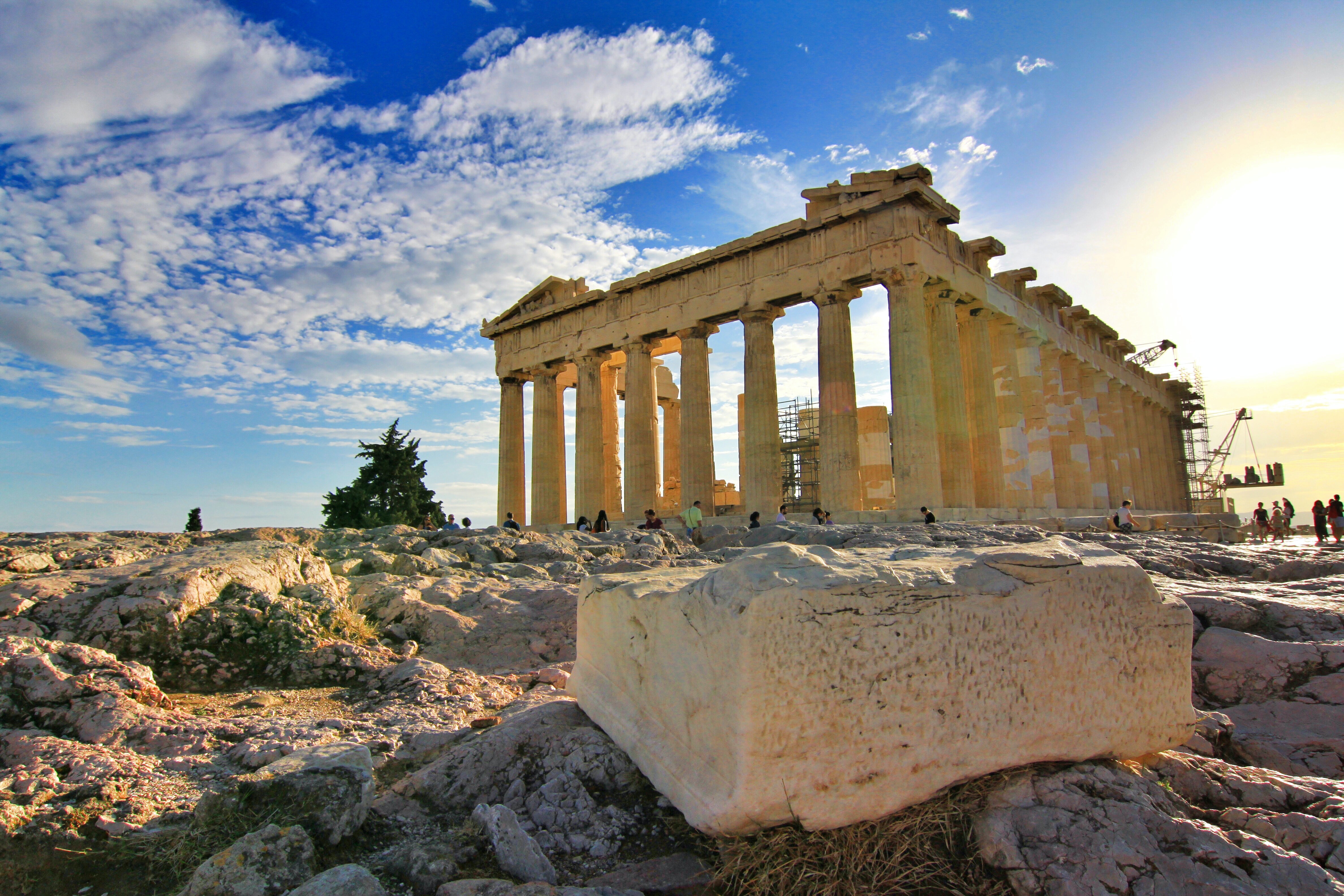
- A place where democracy was born and the birthplace of the Olympics; happens to be the largest city located in one of the most historic countries and is also the capital of Greece. Located in Athens is one of the 7 wonders of the modern world, Acropolis of Athens, the Holy Rock which dates back to 5 BC. Athens is recognized as a global city for its strategic location and its modernistic views in finance, commerce, media, entertainment, arts, international trade, culture, education, and tourism.
- Geros Tou Moria is a traditional Greek tavern, located under the Acropolis in the historic Plaka, one of the most picturesque areas of Athens. Geros Tou Moria is considered the oldest Greek tavern in the Plaka, offering traditional Greek cuisine and wines accompanied by lively Greek music and dancers.
- Known for the region’s prominent administrative, commercial, financial and cultural center, the settlement dates back to 5000 BC. It is located southwest of Athens and is the capital of Corinthia. The city is a major industrial hub at a national level. Settlement dates back to 5000 BC and is a testament to Korinthos’ habitation since the Neolithic Age. Must see attractions include Apostolos Pavlos metropolitan church, the Perivolakia square, the Historic-Folklore Museum, the Ecclesiastical Museum, and the Municipal lending library.
- One of the greatest sanctuaries of ancient Athens dedicated to the goddess Athena is located in the center of the modern city of Acropolis. The masterpieces of ancient architecture in Acropolis have influenced art and culture for many centuries. Although many of the historical sites take up a majority of space in Acropolis, many small rural communes were built around these sites.
- Embark on a wonderful 3-night cruise to the Greek Islands and Turkiye.
- Mykonos, also known as the island of the winds, is one of the Greek Islands, Cyclades. It is also the name of the largest town on the island. Because of the location of Mykonos, several islands relied on it and it became an important place for supplies and transit. Mykonos also holds a place in Greek mythology. It is said that Mykonos was named after its first ruler, Mykons, the son of the god Apollo. Another myth says the island is the location of a great battle between Zeus and the Titans. Today, the island relies heavily on tourism and is widely known for its incredible nightlife.
- Ephesus is the best preserved classical city of the Eastern Mediterranean and among the best places in the world enabling one to genuinely soak in the atmosphere of Roman times. It is now a UNESCO World Heritage Site. Ephesus was once historically known for being the most important commercial center of the ancient world and a religious center of early Christianity.
- An island, located in the Aegean Sea, was a site that was mentioned in the Bible Book of Revelation, which is why it is the destination for Christian pilgrimage. Patmos has evolved over several centuries but has not lost its quiet tranquility.
- High on the hill overlooking the turquoise Aegean Sea sits Santorini, the world’s only inhabited caldera (volcano cauldron). This mountainous island is an amazing sight. Its towns are filled with whitewashed houses that "spill" over the edge of the cliff toward the sea. The striking cobblestone alleyways painted in white and highlighted with blue and red are lined with colorful fabrics and artwork and filled with friendly people. Take in the atmosphere and relax as you gaze at the breathtaking sunsets and stroll along the stunning black sand beaches; then you'll truly understand why this island has been inhabited for thousands of years.
- The city of Thessaloniki stands in the heart of the Balkans and takes the name of Alexander the Great’s step sister. The city was originally established by her husband Cassander in 315BC. Soon it evolved and became a popular place to reside. In 448 BC it became the capital of the Roman providence of Macedonia. Today the city hosts the international fair, the film festival, the Dimitria festivities, and all cultural activities that take place all year round.
- A city located in northern Greece, is the principal seaport of eastern Macedonia. The capital and main port of the city was strategically built on the slopes of Mt. Symvolo. The city was founded at the end of the 7th century BC by settlers from Thassos (Neapolis). Now Kavala has become both industrial and agricultural and became greatly involved in the processing and trading of tobacco. Kavala hosts a variety of attractions that combine their history and their passion and trade of tobacco. The Castle, the Acropolis, the Mohamed Ali square, the Tobacco Museum, Tokos Hall, Megali Lesxi, and City Hall are just some of the various attractions in Kavala.
- Visit Philippi, where Paul the Apostle delivered his first sermon in Europe and planted the first seeds of Christianity. Tour the historic religious sites and monuments of the town, spanning Ancient, Roman, and Byzantine eras.
- Meteora, located in Thessaly and Kalampaka, is a city under the rock of towers. The most famous attraction is the monasteries on the top of the rock towers. Today, the Orthodoxy has been continually practiced uninterrupted for over 600 years by the monasteries on top of the Meteora rocks: Holy Monastery of the Great Meteoro, the Varlaam Monastery, the Saint Stephen Monastery, the Holy Trinity Monastery, the Saint Nicolas Anapafsas Monastery, and the Roussano Monastery.
Hotels
- Crowne Plaza Athens City Center — Athens
- <I>Discovery</I>, Celestyal Cruises — Piraeus
- Famissi Eden Hotel — Kalambaka
- Capsis Hotel — Thessaloniki
- Holiday Inn Attica — Athens
Details
- Tour Operator
- Collette
- Start City
- Athens
- End City
- Athens
- Duration (Days)
- 11
- Activity Level
- Level 3
What's Included
- 19 meals included
- Inter-tour flights included
- A place where democracy was born and the birthplace of the Olympics; happens to be the largest city located in one of the most historic countries and is also the capital of Greece. Located in Athens is one of the 7 wonders of the modern world, Acropolis of Athens, the Holy Rock which dates back to 5 BC. Athens is recognized as a global city for its strategic location and its modernistic views in finance, commerce, media, entertainment, arts, international trade, culture, education, and tourism.
- Geros Tou Moria is a traditional Greek tavern, located under the Acropolis in the historic Plaka, one of the most picturesque areas of Athens. Geros Tou Moria is considered the oldest Greek tavern in the Plaka, offering traditional Greek cuisine and wines accompanied by lively Greek music and dancers.
- Known for the region’s prominent administrative, commercial, financial and cultural center, the settlement dates back to 5000 BC. It is located southwest of Athens and is the capital of Corinthia. The city is a major industrial hub at a national level. Settlement dates back to 5000 BC and is a testament to Korinthos’ habitation since the Neolithic Age. Must see attractions include Apostolos Pavlos metropolitan church, the Perivolakia square, the Historic-Folklore Museum, the Ecclesiastical Museum, and the Municipal lending library.
- One of the greatest sanctuaries of ancient Athens dedicated to the goddess Athena is located in the center of the modern city of Acropolis. The masterpieces of ancient architecture in Acropolis have influenced art and culture for many centuries. Although many of the historical sites take up a majority of space in Acropolis, many small rural communes were built around these sites.
- Embark on a wonderful 3-night cruise to the Greek Islands and Turkiye.
- Mykonos, also known as the island of the winds, is one of the Greek Islands, Cyclades. It is also the name of the largest town on the island. Because of the location of Mykonos, several islands relied on it and it became an important place for supplies and transit. Mykonos also holds a place in Greek mythology. It is said that Mykonos was named after its first ruler, Mykons, the son of the god Apollo. Another myth says the island is the location of a great battle between Zeus and the Titans. Today, the island relies heavily on tourism and is widely known for its incredible nightlife.
- Ephesus is the best preserved classical city of the Eastern Mediterranean and among the best places in the world enabling one to genuinely soak in the atmosphere of Roman times. It is now a UNESCO World Heritage Site. Ephesus was once historically known for being the most important commercial center of the ancient world and a religious center of early Christianity.
- An island, located in the Aegean Sea, was a site that was mentioned in the Bible Book of Revelation, which is why it is the destination for Christian pilgrimage. Patmos has evolved over several centuries but has not lost its quiet tranquility.
- High on the hill overlooking the turquoise Aegean Sea sits Santorini, the world’s only inhabited caldera (volcano cauldron). This mountainous island is an amazing sight. Its towns are filled with whitewashed houses that "spill" over the edge of the cliff toward the sea. The striking cobblestone alleyways painted in white and highlighted with blue and red are lined with colorful fabrics and artwork and filled with friendly people. Take in the atmosphere and relax as you gaze at the breathtaking sunsets and stroll along the stunning black sand beaches; then you'll truly understand why this island has been inhabited for thousands of years.
- The city of Thessaloniki stands in the heart of the Balkans and takes the name of Alexander the Great’s step sister. The city was originally established by her husband Cassander in 315BC. Soon it evolved and became a popular place to reside. In 448 BC it became the capital of the Roman providence of Macedonia. Today the city hosts the international fair, the film festival, the Dimitria festivities, and all cultural activities that take place all year round.
- A city located in northern Greece, is the principal seaport of eastern Macedonia. The capital and main port of the city was strategically built on the slopes of Mt. Symvolo. The city was founded at the end of the 7th century BC by settlers from Thassos (Neapolis). Now Kavala has become both industrial and agricultural and became greatly involved in the processing and trading of tobacco. Kavala hosts a variety of attractions that combine their history and their passion and trade of tobacco. The Castle, the Acropolis, the Mohamed Ali square, the Tobacco Museum, Tokos Hall, Megali Lesxi, and City Hall are just some of the various attractions in Kavala.
- Visit Philippi, where Paul the Apostle delivered his first sermon in Europe and planted the first seeds of Christianity. Tour the historic religious sites and monuments of the town, spanning Ancient, Roman, and Byzantine eras.
- Meteora, located in Thessaly and Kalampaka, is a city under the rock of towers. The most famous attraction is the monasteries on the top of the rock towers. Today, the Orthodoxy has been continually practiced uninterrupted for over 600 years by the monasteries on top of the Meteora rocks: Holy Monastery of the Great Meteoro, the Varlaam Monastery, the Saint Stephen Monastery, the Holy Trinity Monastery, the Saint Nicolas Anapafsas Monastery, and the Roussano Monastery.
Pricing
| Option | Price | Departure | Return |
|---|---|---|---|
| Double | USD 4,399.00 | 2026-05-05 | |
| Single | USD 5,399.00 | 2026-05-05 | |
| Triple | USD 4,150.00 | 2026-05-05 |
Itinerary
-
Day 1: Overnight Flight
Paul the Apostle, the prolific writer of the New Testament letters, was one of the first Christian missionaries. Trace his journey through the ancient cities and pastoral countrysides of Greece and Turkiye.
-
Day 2: Athens, Greece
Arrive in Athens. This evening is yours to explore Greece’s vibrant capital city.
-
Day 3: Athens - Corinth - Athens
This morning, travel to Corinth where Paul lived and preached for two years and also wrote 2 epistles. Explore ancient Corinth on a guided tour featuring the Agora, where Paul’s trial by Gallio took place, and the Bema, where Paul was brought before the tribunal, as recorded in the Acts of the Apostles. Back in Athens, see the hill of Areopagus (Mars Hill) – where Paul delivered his famous “Men of Athens” speech – and visit the incomparable Acropolis. This evening, join your fellow travelers for a welcome dinner in the Plaka, Athens’ historic district nestled at the foot of the Acropolis. Celebrate the beginning of a marvelous trip while feasting on local cuisine and fine wine in a traditional taverna while Greek entertainment creates a wonderful ambiance around you.
-
Day 4: Athens - Piraeus* (Embarkation) - Mykonos
Embark on a 3-night cruise to the Greek Islands and Turkiye. Breakfast, lunch, and dinner are served daily while on board. The island of Mykonos is your first stop. This charming, mountainous island is known for the hundreds of tiny chapels, whitewashed buildings, and beautiful windmills that dot its landscape. Don’t miss Mykonos Town, following the mazes of narrow streets full of bustling activity. Enjoy free time to explore this island paradise.
-
Day 5: Kusadasi, Turkiye - Patmos, Greece
Visit the Turkish port of Kusadasi for an excursion to the ruins of Ephesus (UNESCO), where Paul the Apostle lived for 3 years during his ministry. You’ll also visit the Agora, the great theater, and the stadium where chariot races and gladiatorial combats took place. Legend claims that Paul fought here against wild beasts. Visit the House of Mary, where the Virgin Mother spent her last days. Continue your cruise to Patmos. Visit the Monastery of John and the Cave of the Apocalypse where John the Evangelist wrote the Book of Revelation during his exile.
-
Day 6: Heraklion (Crete)** - Santorini
Enjoy an excursion to the incredible open-air museum of the Minoan Palace of Knossos. Then, during free time in Crete’s largest city, enjoy a variety of museums, shopping, or do some people watching at a local café. Later, arrive on the island of Santorini, known as the “Black Pearl of the Aegean.” Enjoy time at leisure to independently explore this or purchase a ship excursion from the cruise line.
-
Day 7: Piraeus* (Disembarkation) - Kalambaka
After an early morning disembarkation, travel north. Pause at Thermopylae, famous for its heroic defense by Leonidas against the Persian army. This afternoon, visit an icon-painting workshop and discover the ancient traditions behind the sacred images used in Orthodox Byzantine devotional tradition. Overnight in Kalambaka.
-
Day 8: Kalambaka - Meteora - Thessaloniki
Marvel at the hanging monasteries of Meteora (UNESCO). These dark, sandstone pinnacles rise abruptly from the plain of Thessaly, with 6 historic monasteries perched upon their peaks. Beginning in the 10th century, hermits, monks, and ascetics sought solitude and spiritual solace in these dramatic crags. Visit two amazing Meteora monasteries*** which are renowned for their intricate construction and exquisite Byzantine art. Your day ends in Thessaloniki, Greece’s second largest city. Founded in 315 B.C., Thessaloniki was an early center for Christianity. Paul visited and preached here during the winters of A.D. 49-50 and wrote 2 epistles to the ancient Thessalonians.
-
Day 9: Thessaloniki - Kavala - Philippi - Thessaloniki
Travel to the coastal town of Kavala where Paul, accompanied by Silas, Luke, and Timothy, first set foot on European soil. In nearby Philippi, Paul delivered his first sermon in Europe, planting the seeds of Christianity. Join a local expert for a guided tour of this historic town featuring the archaeological site and monuments spanning the Ancient Roman and Byzantine eras. See the dungeon where Paul was held prisoner and the site where he baptized Lydia, the first Christian in Europe.
-
Day 10: Thessaloniki - Athens
Proceed through the fertile Thessalian Valley and the plains of Central Greece to Athens, arriving in the late afternoon. This evening, celebrate the end of your spiritual journey during a farewell dinner at your hotel located close to the airport.
-
Day 11: Athens - Tour Ends
Return home inspired by the incredible, soothing landscapes and the words and deeds of Paul the Apostle.