
Sunny Portugal Lisbon, Alentejo, Algarve & Portuguese Riviera
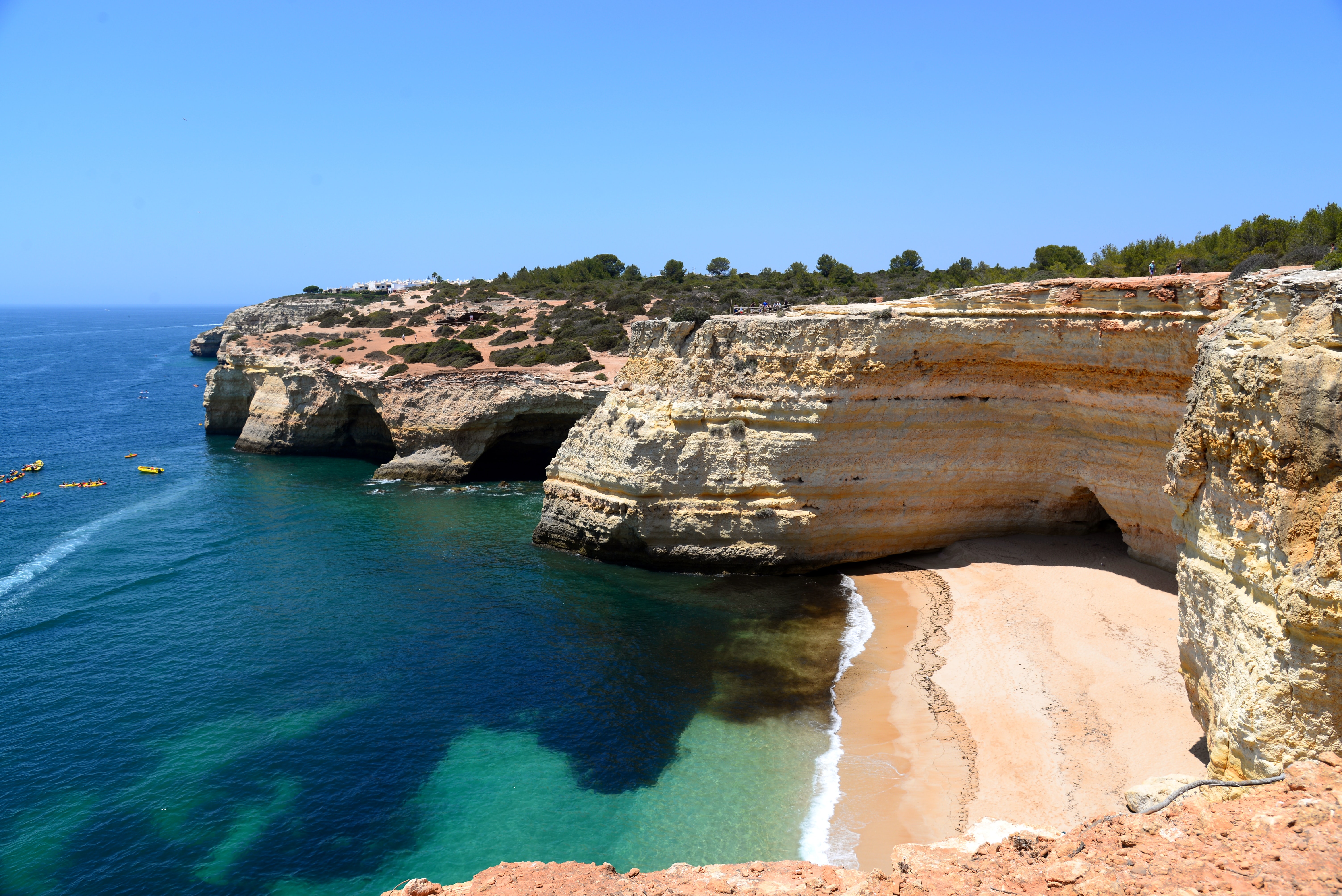
From the Portuguese capital, Lisbon, to the sunny cliffs of the Algarve and Portuguese Riviera, venture along Portugal’s stunning shoreline. In Evora, step inside a medieval city with Roman ruins. Enjoy a leisurely 3-night stay in the Algarve region. Explore soft, sandy beaches and classic fishing villages. Take advantage of a free day to soak in the Portuguese sunshine and savor local flavors. Visit the charming village of Monchique with its Moorish inspired architecture. Encounter picturesque resort towns, winding cobblestone streets, oceanfront promenades, and quaint villages.
From the Portuguese capital, Lisbon, to the sunny cliffs of the Algarve and Portuguese Riviera, venture along Portugal’s stunning shoreline. In Evora, step inside a medieval city with Roman ruins. Enjoy a leisurely 3-night stay in the Algarve region. Explore soft, sandy beaches and classic fishing villages. Take advantage of a free day to soak in the Portuguese sunshine and savor local flavors. Visit the charming village of Monchique with its Moorish inspired architecture. Encounter picturesque resort towns, winding cobblestone streets, oceanfront promenades, and quaint villages.
Highlights
- Spread across steep hillsides that overlook the Rio Tejo, Lisbon offers all the delights you’d expect of Portugal’s star attraction, yet with half the fuss of other European capitals. Gothic cathedrals, majestic monasteries and quaint museums are all part of the colorful cityscape, but the real delights of discovery lie in wandering the narrow lanes of Lisbon’s lovely backstreets. The Lisbon experience encompasses so many things, from enjoying a fresh pastry and bica (espresso) on a petite leafy plaza to window-shopping in elegant Chiado. It’s mingling with Lisboêtas at a neighborhood festival or watching the sunset from the old Moorish castle.
- For your first choice, you can discover the art of the Portuguese sidewalks on a locally led walking tour. Get to know the history behind the emblematic Portuguese sidewalks, which are a symbol of culture and art in the country today. Black and white, symmetrical or not, the sidewalks have shapes and designs that narrate an era. For your second choice, you can venture with your Tour Manager and discover the city through the lens of the country’s beloved salted codfish. Hear how the fishermen throughout history would trek out into the cold, North Atlantic waters for this delicacy that cannot be found on Portuguese seashores. Lisbon & Its Famed "Calcadas" Walking Tour Activity Level 3 Led by a local guide, this tour requires walking 2 miles excluding Elevador da Gloria. It will include steep hills and walking on cobblestone, uneven streets. The Way of the Cod - Codfish Route Activity Level 2 Includes public transportation using the subway. Involves walking on cobblestoned, uneven streets.
- Standing proudly on the bank of the Targus river in Lisbon is Belém Tower, a UNESCO World Heritage site. This 16th-century tower was where explorers from the Age of Discovery set out towards the New World, across the Atlantic.
- Visit a local cork factory, where you’ll learn about the product’s importance to the local economy. Harvested from the cork oak, or sobreiro as it’s known in Portuguese, cork is transformed into hundreds of different products.
- One of Portugal’s most beautifully preserved medieval towns, Évora is an enchanting place to delve into the past. Inside the 14th-century walls, Évora’s narrow, winding lanes lead to striking architectural works: an elaborate medieval cathedral and cloisters; the cinematic columns of the Templo Romano (near the intriguing Roman baths); and a picturesque town square, once the site of some rather gruesome episodes courtesy of the Inquisition. Aside from its historic and aesthetic virtues, Évora is also a lively university town, and its many attractive restaurants serve up hearty Alentejan cuisine.
- Travel across the famous Alentejo region of southern Portugal, known for three things; pottery, wine, and cork. Sparsely populated, the Alentejo region is rolling green hills, orchards of sobreiro trees, and vineyards.
- The town lies along the bank of the Rio Bensafrim, with 16th-century walls enclosing the old town’s pretty, cobbled streets and picturesque plazas and churches. Beyond these lies a modern, but not overly unattractive, modern sprawl. The town’s good restaurants and range of fabulous beaches nearby add to the allure. With every activity under the sun (literally) on offer, plus a pumping nightlife, it’s not surprising that people of all ages are drawn here. Aside from its hedonistic appeal, Lagos has historical clout, having launched many naval excursions during Portugal’s extraordinary Age of Discoveries.
- The Algarve is alluring. Coastal Algarve receives much exposure for its breathtaking cliffs, golden beaches, scalloped bays and sandy islands. But the letter 'S' (for sun, surf and sand) is only one letter in the Algarvian alphabet: activities, beach bars (and discos), castles (both sandy and real), diving, entertainment, fun. Coastal Algarve is not all there is to the region. The enchanting inner Algarve boasts pretty castle towns and historic villages, cork tree– and flower-covered hillsides, and birdlife.
- The Riviera stretches from Lisbon and Cascais. The coastline has become a place where the elite vacation between September and October, and a popular tourist destination for its chic look. Removed from the city, the Lisbon coastline is easy access to all the culture that Lisbon offers. It has become a major hotspot for major international celebrities from the world of fashion, sport, and entertainment. The Riviera is also known for is world class conditions for surfing.
- Óbidos is a small town located on the Atlantic Coast of Portugal. The town’s origins can be traced back to an early Roman settlement. The area of the town is located on a hilltop, surrounded by a fortified wall. From its streets, squares, fortified wall and castle, the town remains as a well preserved example of medieval architecture. It is because of this that the town is a popular tourist destination.
- With its rippling mountains, dewy forests thick with ferns and lichen, exotic gardens and glittering palaces, Sintra is like a page torn from a fairy tale. Its Unesco World Heritage–listed centre, Sintra-Vila, is dotted with pastel-hued manors folded into luxuriant hills that roll down to the blue Atlantic. The jewel on the crown lording ominously over the picturesque town center is the National Palace, once the summer retreat of the Portuguese monarchy.
- While in Sintra, you have the choice of two activities. First, you may choose to explore the quaint hilltop village, making your way along the winding streets lined with cork products. Then get a taste of Sintra when you savor a local pastry. Your other option is to be led on a tour of the National Palace of Sintra, the country’s best-preserved palace from the Middle Ages. Sintra Walking Tour Activity Level: 2 20 minute Tour Manager guided orientation tour of Sintra with pastra at Piriquita and drink with free time. Sintra National Palace Activity Level: 3 When visiting the National Palace, travelers need to be able stand for 30 minutes at a time and be able to climb 100 steps.
- Heritage is the legacy of the past, what we live with today, and what we pass on to future generations. A World Heritage Site is a place of special cultural or physical significance and is selected by the United Nations Educational, Scientific and Cultural Organization (UNESCO). To be nominated a site must meet at least one of the 10 cultural and natural criteria. UNESCO World Heritage sites included on your tour are Jerónimos Monastery, Tower of Belém, Evora, and Sintra.
Hotels
- Turim Marques Hotel — Lisbon
- Vila Galé — Evora
- Vila Galé Lagos — Algarve
- Vila Galé — Cascais
Details
- Tour Operator
- Collette
- Start City
- Lisbon
- End City
- Cascais
- Duration (Days)
- 10
- Activity Level
- Level 2
What's Included
- 13 meals included
- Inter-tour flights included
- Spread across steep hillsides that overlook the Rio Tejo, Lisbon offers all the delights you’d expect of Portugal’s star attraction, yet with half the fuss of other European capitals. Gothic cathedrals, majestic monasteries and quaint museums are all part of the colorful cityscape, but the real delights of discovery lie in wandering the narrow lanes of Lisbon’s lovely backstreets. The Lisbon experience encompasses so many things, from enjoying a fresh pastry and bica (espresso) on a petite leafy plaza to window-shopping in elegant Chiado. It’s mingling with Lisboêtas at a neighborhood festival or watching the sunset from the old Moorish castle.
- For your first choice, you can discover the art of the Portuguese sidewalks on a locally led walking tour. Get to know the history behind the emblematic Portuguese sidewalks, which are a symbol of culture and art in the country today. Black and white, symmetrical or not, the sidewalks have shapes and designs that narrate an era. For your second choice, you can venture with your Tour Manager and discover the city through the lens of the country’s beloved salted codfish. Hear how the fishermen throughout history would trek out into the cold, North Atlantic waters for this delicacy that cannot be found on Portuguese seashores. Lisbon & Its Famed "Calcadas" Walking Tour Activity Level 3 Led by a local guide, this tour requires walking 2 miles excluding Elevador da Gloria. It will include steep hills and walking on cobblestone, uneven streets. The Way of the Cod - Codfish Route Activity Level 2 Includes public transportation using the subway. Involves walking on cobblestoned, uneven streets.
- Standing proudly on the bank of the Targus river in Lisbon is Belém Tower, a UNESCO World Heritage site. This 16th-century tower was where explorers from the Age of Discovery set out towards the New World, across the Atlantic.
- Visit a local cork factory, where you’ll learn about the product’s importance to the local economy. Harvested from the cork oak, or sobreiro as it’s known in Portuguese, cork is transformed into hundreds of different products.
- One of Portugal’s most beautifully preserved medieval towns, Évora is an enchanting place to delve into the past. Inside the 14th-century walls, Évora’s narrow, winding lanes lead to striking architectural works: an elaborate medieval cathedral and cloisters; the cinematic columns of the Templo Romano (near the intriguing Roman baths); and a picturesque town square, once the site of some rather gruesome episodes courtesy of the Inquisition. Aside from its historic and aesthetic virtues, Évora is also a lively university town, and its many attractive restaurants serve up hearty Alentejan cuisine.
- Travel across the famous Alentejo region of southern Portugal, known for three things; pottery, wine, and cork. Sparsely populated, the Alentejo region is rolling green hills, orchards of sobreiro trees, and vineyards.
- The town lies along the bank of the Rio Bensafrim, with 16th-century walls enclosing the old town’s pretty, cobbled streets and picturesque plazas and churches. Beyond these lies a modern, but not overly unattractive, modern sprawl. The town’s good restaurants and range of fabulous beaches nearby add to the allure. With every activity under the sun (literally) on offer, plus a pumping nightlife, it’s not surprising that people of all ages are drawn here. Aside from its hedonistic appeal, Lagos has historical clout, having launched many naval excursions during Portugal’s extraordinary Age of Discoveries.
- The Algarve is alluring. Coastal Algarve receives much exposure for its breathtaking cliffs, golden beaches, scalloped bays and sandy islands. But the letter 'S' (for sun, surf and sand) is only one letter in the Algarvian alphabet: activities, beach bars (and discos), castles (both sandy and real), diving, entertainment, fun. Coastal Algarve is not all there is to the region. The enchanting inner Algarve boasts pretty castle towns and historic villages, cork tree– and flower-covered hillsides, and birdlife.
- The Riviera stretches from Lisbon and Cascais. The coastline has become a place where the elite vacation between September and October, and a popular tourist destination for its chic look. Removed from the city, the Lisbon coastline is easy access to all the culture that Lisbon offers. It has become a major hotspot for major international celebrities from the world of fashion, sport, and entertainment. The Riviera is also known for is world class conditions for surfing.
- Óbidos is a small town located on the Atlantic Coast of Portugal. The town’s origins can be traced back to an early Roman settlement. The area of the town is located on a hilltop, surrounded by a fortified wall. From its streets, squares, fortified wall and castle, the town remains as a well preserved example of medieval architecture. It is because of this that the town is a popular tourist destination.
- With its rippling mountains, dewy forests thick with ferns and lichen, exotic gardens and glittering palaces, Sintra is like a page torn from a fairy tale. Its Unesco World Heritage–listed centre, Sintra-Vila, is dotted with pastel-hued manors folded into luxuriant hills that roll down to the blue Atlantic. The jewel on the crown lording ominously over the picturesque town center is the National Palace, once the summer retreat of the Portuguese monarchy.
- While in Sintra, you have the choice of two activities. First, you may choose to explore the quaint hilltop village, making your way along the winding streets lined with cork products. Then get a taste of Sintra when you savor a local pastry. Your other option is to be led on a tour of the National Palace of Sintra, the country’s best-preserved palace from the Middle Ages. Sintra Walking Tour Activity Level: 2 20 minute Tour Manager guided orientation tour of Sintra with pastra at Piriquita and drink with free time. Sintra National Palace Activity Level: 3 When visiting the National Palace, travelers need to be able stand for 30 minutes at a time and be able to climb 100 steps.
- Heritage is the legacy of the past, what we live with today, and what we pass on to future generations. A World Heritage Site is a place of special cultural or physical significance and is selected by the United Nations Educational, Scientific and Cultural Organization (UNESCO). To be nominated a site must meet at least one of the 10 cultural and natural criteria. UNESCO World Heritage sites included on your tour are Jerónimos Monastery, Tower of Belém, Evora, and Sintra.
Pricing
| Option | Price | Departure | Return |
|---|---|---|---|
| Double | USD 3,199.00 | 2026-04-26 | |
| Single | USD 3,849.00 | 2026-04-26 | |
| Double | USD 3,299.00 | 2026-05-07 | |
| Single | USD 3,999.00 | 2026-05-07 | |
| Double | USD 3,299.00 | 2026-05-10 | |
| Single | USD 3,999.00 | 2026-05-10 | |
| Triple | USD 3,269.00 | 2026-05-10 | |
| Double | USD 3,299.00 | 2026-05-24 | |
| Single | USD 3,949.00 | 2026-05-24 | |
| Triple | USD 3,249.00 | 2026-05-24 |
Itinerary
-
Day 1: Overnight Flight
Ancient castles and Roman ruins, groves of orange and almond trees, quiet whitewashed villages, and welcoming locals – Portugal is waiting for you.
-
Day 2: Lisbon, Portugal
Say hello to Lisbon, Portugal's capital and a city full of authenticity, where old customs and ancient history intermix with cultural entertainment. Tonight, join your fellow travelers for a welcome dinner.
-
Day 3: Lisbon
Choose how you want to explore Lisbon today because it’s your choice! Discover the art and tradition of Portuguese sidewalks during a locally led walking tour -OR- venture with your Tour Manager on foot and discover the city through the lens of the businesses and streets connected with the country's most loved fish, bacalhau (salted codfish). After, travel to Belem and see the iconic Belem Tower (UNESCO). View the façade of the 16th-century Jeronimos Monastery* (UNESCO) and learn about the importance of this iconic site. Tonight, you may choose to join an optional tour to listen to local artists perform traditional Fado music, a UNESCO intangible cultural heritage highlight.
-
Day 4: Lisbon - Evora
Today, make your way through Portugal’s charming countryside. Visit a family-owned cork factory, where you'll learn about the product’s importance to the local economy and why Portugal is the world’s top cork producer. Your journey then takes you to Evora (UNESCO) – the “Museum City of Portugal.” In the afternoon, with your local expert, take time to explore this medieval walled city and see its well-preserved Roman temple up close.
-
Day 5: Evora - Lagos
Journey to the stunning coasts of the Algarve - the southernmost region of Portugal. On the way, visit a local gin distillery. Learn how one man took a homemade drink and implemented traditional Portuguese stills and local ingredients to craft a premium gin. Savor the flavors of these botanicals before continuing your journey south. This afternoon, keep the day balanced and fruity at a winery. Indulge in full-bodied wines from the Alentejo region during a winery tour, tasting, and light lunch before continuing on your drive. Later, switch the rich taste of local wine and spirits for salty ocean air in Algarve. This evening, explore the historic resort town of Lagos, where Moorish and Renaissance influences meet towering seaside cliffs. Many celebrated voyagers began their explorations from this bustling port city.
-
Day 6: Lagos
It's your day to experience the Algarve on your own. Geraniums, camellias, and oleanders grow alongside fig, orange, and almond trees, while brightly colored fishing boats bob in the sea. Protected by hills to the north and warmed by the sea, the Algarve’s mild climate and beautiful beaches attract visitors from all over the world. You may choose to join an optional boat tour** today that gets you closer to some of the most famous coastal scenery in Portugal.
-
Day 7: Lagos - Portimão - Monchique - Lagos
This morning venture along the coast to discover the importance of the sardine canning industry in the Algarve. Then, continue to Monchique, a mountain village nestled within a rich landscape, to learn the secrets of regional bread and fruits. Sample them with a savory picnic lunch featuring freshly prepared Algarve seasonal and local specialties. Return to Lagos for an evening at leisure.
-
Day 8: Lagos - Setúbal - Cascais
En route to the Portuguese Riviera, stop in Setúbal a colorful industrial city and one of southern Europe's best-kept secrets. See the Mercado (Farmers Market) do Livramento up close. It is considered one of the best fish markets in the world, and it’s also rich with displays of fresh fruits and vegetables. Meet local artisans at a family-run shop and learn how the famous hand-painted Portuguese tiles, azulejos, are made. Then, head to the Portuguese Riviera. Mansions scattered throughout Cascais and Monte Estoril all hint at this area’s history as a haven for exiled European royals and nobility.
-
Day 9: Cascais - Obidos - Sintra - Cascais
Explore the picture-perfect city of Obidos, where white-washed houses sit snug within medieval city walls, and toast with a ginjinha, a sour cherry liqueur served in a small chocolate cup. Continue on to Sintra (UNESCO), a breathtaking hub that served as the summer residence of Portuguese kings for six centuries. Then, it’s your choice! Explore the quaint hilltop village of Sintra and take some time to wander through the winding streets -OR- join a guided tour of the National Palace of Sintra, considered the best-preserved medieval palace in Portugal. Bid Portugal goodbye during dinner in Cascais and celebrate the end of your unforgettable journey.
-
Day 10: Cascais - Tour Ends
Your tour ends today.