
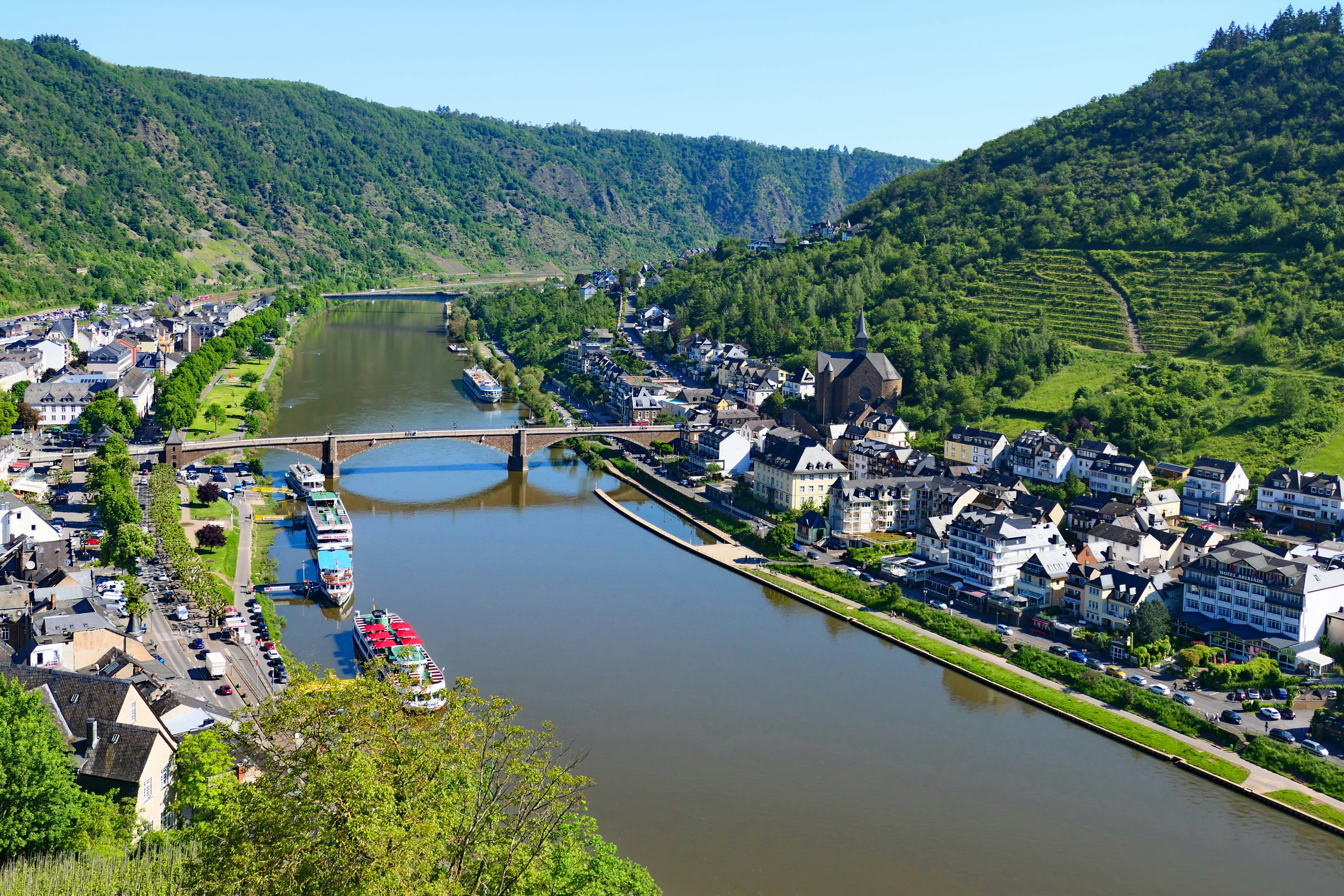
Magical Rhine and Moselle Rivers
Glide along the enchanting Rhine and Moselle Rivers on a leisurely journey to France, Germany, and the Netherlands. Join a local expert for a tour of Amsterdam. Experience the storybook town of Cochem and the historic Reichsburg Castle, perched high above the banks of the Mosel River. Cruise past charming panoramas as you get to know the culture and deep history of the region.
Glide along the enchanting Rhine and Moselle Rivers on a leisurely journey to France, Germany, and the Netherlands. Join a local expert for a tour of Amsterdam. Experience the storybook town of Cochem and the historic Reichsburg Castle, perched high above the banks of the Mosel River. Cruise past charming panoramas as you get to know the culture and deep history of the region.
Highlights
- Board your cruise ship for seven nights of relaxation and exploration. From your cruise ship you will see fairy-tale castles, endless vineyards and ancient cities. While aboard, enjoy first-class amenities and dining. Travel from Switzerland to the Netherlands in style, and gain a new perspective that only a river and land travel experience can offer.
- Strasbourg is the capital of the region of Alsace in eastern France and the seat of the European Parliament. It is located just west of the Rhine River and the German border near the Black Forest. The region has been passed back and forth between France and Germany many times over the centuries, but it has remained French since the end of WWII. The whole city center was made a UNESCO World Heritage Site in 1988. It is famous for its 12th-century cathedral (the tallest in the world after the Giza Pyramids when it was completed in 1439), and was the place where Johannes Gutenberg introduced the first movable type printing press.
- One of the oldest towns in Rhineland-Palatinate, Germany, Speyer was founded by the Romans. The town has been a diocesan town since 346. Its first churches and monasteries were built in the 6th and 7th centuries. Today, Speyer contains several historical remains. The medieval city is surrounded by modern industrial and residential areas. Speyer is an important regional retail centre and tourism is a leading industry.
- “Leben. Im Quadrat” (Life. In the Square), as they say in Manneheim, a city in the southwestern part of Germany. Today, Mannheim is among the 20 largest cities in Germany. The city is the centre of the larger densely populated Rhine-Neckar Metropolitan Region. Mannheim is quite unusual among German cities in that its streets and avenues are laid out in a grid pattern, leading to its nickname “die Quadratestadt” (“city of the squares”). Here’s a fun fact: the name of the city was first recorded in a legal transaction in 766. Mannheim is incredibly rich in history; during the first World War, Mannheim’s industrial plants played a key role in Germany’s war economy. During the second World War, the city of Manneheim was almost completely destroyed due to air raids. Before Mannheim became a city at the beginning of the 17th century, it was a small fishing village. Modern Mannheim is now one of the hotspots of immigration, and because of that visitors will encounter a lively and colorful mixture of cultures.
- Cochem was settled long ago, as early as Celtic and Roman times. In 1332, Cochem was granted town rights, and shortly thereafter, the town fortifications, which still stand today, were built. Interesting legends, amazing folklore and a rich web of history are woven into every street of Cochem. Cochem’s picturesque beauty makes it a favorite place for visitors. It is the center of the Mosel wine trade. It wasn’t until the early 19th century that the first real tourists came to Cochem who were mostly English artists that recorded the romance and beauty of the Mosel Valley in their drawings.
- Cologne, Germany is located on the Rhine River, and was founded in the 1st century by the Romans. It is the home of the Gothic Cologne Cathedral, one of the largest in Europe, which holds the relics of the Three Magi. There are several Roman sites exhibited in Cologne, including one underneath the cathedral itself. The city was a very import trading center in the Middle Ages with its strategic position on the Rhine, and was also heavily bombed in WWII due to its location.
- This is the capital city of The Netherlands, with a population of about 1.5 million in the metro area. It is known for its rings of canals, the Red Light District, the Anne Frank House and its famous museums (Rijksmuseum, Van Gogh Museum, etc.). Amsterdam has a rich history in commerce, mostly due to the country’s colonies all over the world, and this gives the city a fascinating flavor and diverse population even now. There are great restaurants and shopping, and it is a very comfortable place to walk around in. It is also a great starting point from which to explore The Netherlands and beyond.
Hotels
- <I>MS Amadeus Brilliant</I> — Basel
Details
- Tour Operator
- Collette
- Start City
- Zurich
- End City
- Amsterdam
- Duration (Days)
- 9
- Activity Level
- Level 2
What's Included
- 20 meals included
- Board your cruise ship for seven nights of relaxation and exploration. From your cruise ship you will see fairy-tale castles, endless vineyards and ancient cities. While aboard, enjoy first-class amenities and dining. Travel from Switzerland to the Netherlands in style, and gain a new perspective that only a river and land travel experience can offer.
- Strasbourg is the capital of the region of Alsace in eastern France and the seat of the European Parliament. It is located just west of the Rhine River and the German border near the Black Forest. The region has been passed back and forth between France and Germany many times over the centuries, but it has remained French since the end of WWII. The whole city center was made a UNESCO World Heritage Site in 1988. It is famous for its 12th-century cathedral (the tallest in the world after the Giza Pyramids when it was completed in 1439), and was the place where Johannes Gutenberg introduced the first movable type printing press.
- One of the oldest towns in Rhineland-Palatinate, Germany, Speyer was founded by the Romans. The town has been a diocesan town since 346. Its first churches and monasteries were built in the 6th and 7th centuries. Today, Speyer contains several historical remains. The medieval city is surrounded by modern industrial and residential areas. Speyer is an important regional retail centre and tourism is a leading industry.
- “Leben. Im Quadrat” (Life. In the Square), as they say in Manneheim, a city in the southwestern part of Germany. Today, Mannheim is among the 20 largest cities in Germany. The city is the centre of the larger densely populated Rhine-Neckar Metropolitan Region. Mannheim is quite unusual among German cities in that its streets and avenues are laid out in a grid pattern, leading to its nickname “die Quadratestadt” (“city of the squares”). Here’s a fun fact: the name of the city was first recorded in a legal transaction in 766. Mannheim is incredibly rich in history; during the first World War, Mannheim’s industrial plants played a key role in Germany’s war economy. During the second World War, the city of Manneheim was almost completely destroyed due to air raids. Before Mannheim became a city at the beginning of the 17th century, it was a small fishing village. Modern Mannheim is now one of the hotspots of immigration, and because of that visitors will encounter a lively and colorful mixture of cultures.
- Cochem was settled long ago, as early as Celtic and Roman times. In 1332, Cochem was granted town rights, and shortly thereafter, the town fortifications, which still stand today, were built. Interesting legends, amazing folklore and a rich web of history are woven into every street of Cochem. Cochem’s picturesque beauty makes it a favorite place for visitors. It is the center of the Mosel wine trade. It wasn’t until the early 19th century that the first real tourists came to Cochem who were mostly English artists that recorded the romance and beauty of the Mosel Valley in their drawings.
- Cologne, Germany is located on the Rhine River, and was founded in the 1st century by the Romans. It is the home of the Gothic Cologne Cathedral, one of the largest in Europe, which holds the relics of the Three Magi. There are several Roman sites exhibited in Cologne, including one underneath the cathedral itself. The city was a very import trading center in the Middle Ages with its strategic position on the Rhine, and was also heavily bombed in WWII due to its location.
- This is the capital city of The Netherlands, with a population of about 1.5 million in the metro area. It is known for its rings of canals, the Red Light District, the Anne Frank House and its famous museums (Rijksmuseum, Van Gogh Museum, etc.). Amsterdam has a rich history in commerce, mostly due to the country’s colonies all over the world, and this gives the city a fascinating flavor and diverse population even now. There are great restaurants and shopping, and it is a very comfortable place to walk around in. It is also a great starting point from which to explore The Netherlands and beyond.
Itinerary
-
Day 1: Overnight Flight
Discover a dramatic waterway where winding valleys give way to riverside cities and Alpine hamlets. Venture along the Rhine and Moselle and spend time in beloved European cities, getting a taste of the local culture at each stop along the way.
-
Day 2: Zürich, Switzerland - Basel - Board Cruise Ship
Today, after your flight arrives in Zürich, Switzerland,* travel to Basel** where you’ll board your ship. As arrival times will vary, the ship's lounge is available for you to relax on board until your cabin is ready in the late afternoon. If arriving early in the day, you may wish to take this time to explore Basel independently. Then, settle into your home on the ship for the next seven nights, featuring outside staterooms, delicious food and wine at every dinner, and daily onboard musical performances. This evening, meet in the lounge for a cocktail reception followed by a welcome dinner.
-
Day 3: Breisach, Germany - Freiburg - Breisach
This morning, travel to Germany and experience Breisach, one of the oldest towns in the country. Spend the morning strolling through its picturesque alleys and colorful market square on a guided tour before continuing by coach to Freiburg, the capital of the Black Forest region. This afternoon, enjoy some free time back in Breisach to explore on your own. Perhaps you’ll visit one of the town’s many cafés or ice cream shops before your ship departs for Strasbourg.
-
Day 4: Strasbourg, France
Cross the French border and experience Strasbourg, a fairytale town that blends centuries of international influences to create its own unique culture. On a guided walking tour of the old quarter, Petite France, and a canal cruise, take in the iconic timber-framed houses, the Cathedral of Notre Dame, and Place de la République. Make the most of your free time in the afternoon by exploring this perfectly preserved town before returning to your ship.
-
Day 5: Speyer, Germany - Mannheim
Sail to Speyer, another of Germany’s oldest cities. This morning, it’s your choice! Get to know Speyer on a walking tour where you’ll trace the story of Speyer’s Jewish community from the year 1084 to today, visiting significant UNESCO sites -OR- follow guides on a journey back in time to discover the everyday lives of citizens in the Middle Ages. Later, the river takes you to Mannheim where you’ll have free time to explore this German city and its parks on your own. Perhaps you’ll join an optional excursion to Heidelberg, an ancient city of Renaissance buildings and castle ramparts.
-
Day 6: Alken - Cochem
Start your morning with scenic sailing along the Rhine and through the Lorelei Passage, the river’s narrowest point, named for a storied siren. After lunch, dock in Alken and travel by coach to Cochem, a storybook town overlooking the water. Embark on a guided tour through the town and into Reichsburg Castle,*** a fortress perched high upon a hill with a stunning view of Cochem and the Moselle Valley below.
-
Day 7: Cologne
Your journey brings you to Cologne, where you’ll join a guide for a walking tour of the city’s Gothic Old Town. Wander along cobblestone streets and admire the Cologne Cathedral, the Roman Dionysus mosaic, and the Romanesque church of St. Martin. Top off this walking tour with a tasting of Cologne’s famous Kölsch beer. Continue your afternoon gliding along the Rhine River and passing through the picturesque German landscapes dotted with medieval towns. End your day at the Captain’s Gala Dinner – a lively celebration of food, music, and entertainment.
-
Day 8: Amsterdam, Netherlands
Begin your day in Amsterdam, a city of narrow canals and stone bridges. Embark on a tour with a local expert before seeing the city from a different perspective, voyaging along the city’s centuries-old canal system. Sail by charming cafés and famous 16th-century row houses stacked side-by-side.
-
Day 9: Amsterdam - Disembark Ship - Tour Ends
This morning, wish the river valleys goodbye as you disembark and your tour comes to a close.