
Spain's Classics & Portugal
Embark on an Iberian adventure as you take in medieval architecture, idyllic landscapes, and delectable cuisine. Embark on a tour of Barcelona and view Antoni Gaudí’s architectural masterpieces, including La Sagrada Familia. Enjoy an authentic paella experience with lunch. Visit the exotic and expansive Alhambra Palace. Enjoy the fascinating art form that is flamenco. Marvel at the timeless masterpieces at the Prado Museum. Explore Lisbon, Europe’s second oldest capital city and see Belém and its many monuments, including Jerónimos Monastery (UNESCO). Visit the medieval walled town of Obidos. Explore Spain and Portugal’s culture and history set against a backdrop of sunny Mediterranean shores and grand mountain ranges.
Embark on an Iberian adventure as you take in medieval architecture, idyllic landscapes, and delectable cuisine. Embark on a tour of Barcelona and view Antoni Gaudí’s architectural masterpieces, including La Sagrada Familia. Enjoy an authentic paella experience with lunch. Visit the exotic and expansive Alhambra Palace. Enjoy the fascinating art form that is flamenco. Marvel at the timeless masterpieces at the Prado Museum. Explore Lisbon, Europe’s second oldest capital city and see Belém and its many monuments, including Jerónimos Monastery (UNESCO). Visit the medieval walled town of Obidos. Explore Spain and Portugal’s culture and history set against a backdrop of sunny Mediterranean shores and grand mountain ranges.
Highlights
- Barcelona is an enchanting seaside city with boundless culture, fabled architecture and a world-class drinking and dining scene. Barcelona's architectural treasures span 2,000-plus years. Towering temple columns, ancient city walls and subterranean stone corridors provide a window into Roman-era Barcino. Fast forward a thousand years to the Middle Ages by taking a stroll through the shadowy lanes of the Gothic quarter, past tranquil plazas and soaring 14th-century cathedrals. In other parts of town bloom the sculptural masterpieces of Modernisme, a mix of ingenious and whimsical creations by Gaudí and his Catalan architectural contemporaries for which this city is so well known. Barcelona has also long-inspired artists, including the likes of Salvador Dalí, Pablo Picasso and Joan Miró, whose works are in bold display in the city's myriad museums.
- La Sagrada Familia, the Holy Family, is a church of the people, built by the people, with the money of the people. While it is not the cathedral of Barcelona, it is widely known due to its unique architecture and phenomenal design initiated by architect Antoni Gaudí. Work on the exploratory church began in 1882 and continue to this day, but with modern technology and the rising number of visitors and donations, the church’s completion date has rapidly become closer. The facades of the church are breathtaking in their intricate and artistic details all of which were inspired by Gaudí. The church is divided into parts including the apse, chapels, cloister, crossing and transepts, crypt, glory façade, the nativity façade, the passion façade, the main nave and the sacristies.
- Valencia is the capital of the autonomous community of Valencia, Spain. It is the third largest city in Spain after Madrid and Barcelona. The city is located on the banks of the Turia River on the east coast of the Iberian Peninsula. Valencia was founded as a Roman colony in 138 B.C. Its historic center is one of the largest in Spain at 169 hectares in size. The region of Spain, specifically Valencia, is known for its paella: a rice dish native to the country of Spain.
- Paella is a type of rice dish originating in the Valencian region on the east coast of Spain. The dish is widely regarded as Spain’s national dish, however most Spaniards consider it to be the regional dish of Valencia. Valencian paella is considered to be the original recipe, even though there are several different kinds of paella. The Valencian dish is comprised of white rice, green vegetables, meat, land snails, beans and seasoning.
- Granada is the capital of the province of Granada in the autonomous community of Andalusia, Spain and sits at the foot of the Sierra Nevada Mountains at the intersection of four rivers. This city is only an hour from the Mediterranean Coast. Granada has been continuously inhabited by people for the past 2500 years, starting under Ancient Roman rule and features rich cultural elements, historic architecture, beautiful beaches and the snowy Sierra Nevada Mountains.
- The Alhambra is a palace and fortress complex located in Granada, Andalusia, Spain. The first palace on the site was built in the 11th century and in the 12th and 13th century a fortress-complex palace was built. It is a vast complex, comprised of many structures. The Alhambra is part fortress, part palace, part garden and part government city. Many visitors come to Grenada specifically just to visit and see the Alhambra.
- Seville is the capital and largest city of the autonomous community of Andalusia, Spain. Seville is the top destination in the Andalusia region for travelers. Approximately 2,200 years old, the early origins of the city date back to the year 712. It is situated on the Guadalquivir River which splits the city into two halves. Seville is famous for being the birthplace of the Flamenco dance. It is also known for its culture, monuments, traditions and artistic heritage.
- The heartbeat of Spain can be found in the houses of flamenco artists. A traditional flamenco show can be found in many of the small towns and cities scattered through the southern region of Spain, Andalusia. Flamenco is a style of dance encompassing the rhythm of lifestyle, personality and beauty of Spaniards. There is eminent beauty in every aspect of a Flamenco show from Andalusian décor, castanets, flamenco attire, polka dots, and the unforgettable strumming of the Spanish guitar. Flamenco is a type of Spanish folk music and dance originating in the region of Andalucía in southern Spain. It includes, singing, dancing, guitar playing and handclaps.
- Córdoba is located in Andalucía, southern Spain, and is the capital of the province of Córdoba. This city has an interesting history full of many diverse cultures and was the capital of a Roman province, the capital of an Arab State and a form of an Islamic government. It has the second largest old town in Europe, featuring Roman architecture, including a Roman bridge, as well as several Islamic and Jewish mosques.
- Madrid is the capital and the largest city in Spain. Madrid sits on the Manzanares River, just northeast of the center of the Iberian Peninsula. It is estimated that the origins of Madrid can be traced back to the 2nd century B.C. Madrid is home to the head of the Spanish government, the Spanish royal family and the headquarters of the World Tourism Organization. Madrid’s influence on politics, education, entertainment, fashion and culture make it one of the world’s major global cities.
- Stroll the halls and galleries inside the world-famous Prado Museum. On a guided tour, step back in time as you view its priceless collection of paintings and sculpture. Open since 1819, the Prado houses the works of legendary European artists from the 15th through early 19th centuries. Stand before the works of Velázquez and Goya, Spain’s greatest painters. Through their genius, gain insight into the rich culture surrounding you. Notable in the museum’s collection is Velázquez’s Las Meninas, one of the most important and studied paintings in the western tradition. Goya’s groundbreaking The Third of May 1808 also calls the Prado home. Whether you are an art aficionado or simply wish to explore the thrill of human expression, this is the perfect way to complete your visit to Madrid.
- Travel across the famous Alentejo region of southern Portugal, known for three things; pottery, wine, and cork. Sparsely populated, the Alentejo region is rolling green hills, orchards of sobreiro trees, and vineyards.
- Spread across steep hillsides that overlook the Rio Tejo, Lisbon offers all the delights you’d expect of Portugal’s star attraction, yet with half the fuss of other European capitals. Gothic cathedrals, majestic monasteries and quaint museums are all part of the colorful cityscape, but the real delights of discovery lie in wandering the narrow lanes of Lisbon’s lovely backstreets. The Lisbon experience encompasses so many things, from enjoying a fresh pastry and bica (espresso) on a petite leafy plaza to window-shopping in elegant Chiado. It’s mingling with Lisboêtas at a neighborhood festival or watching the sunset from the old Moorish castle.
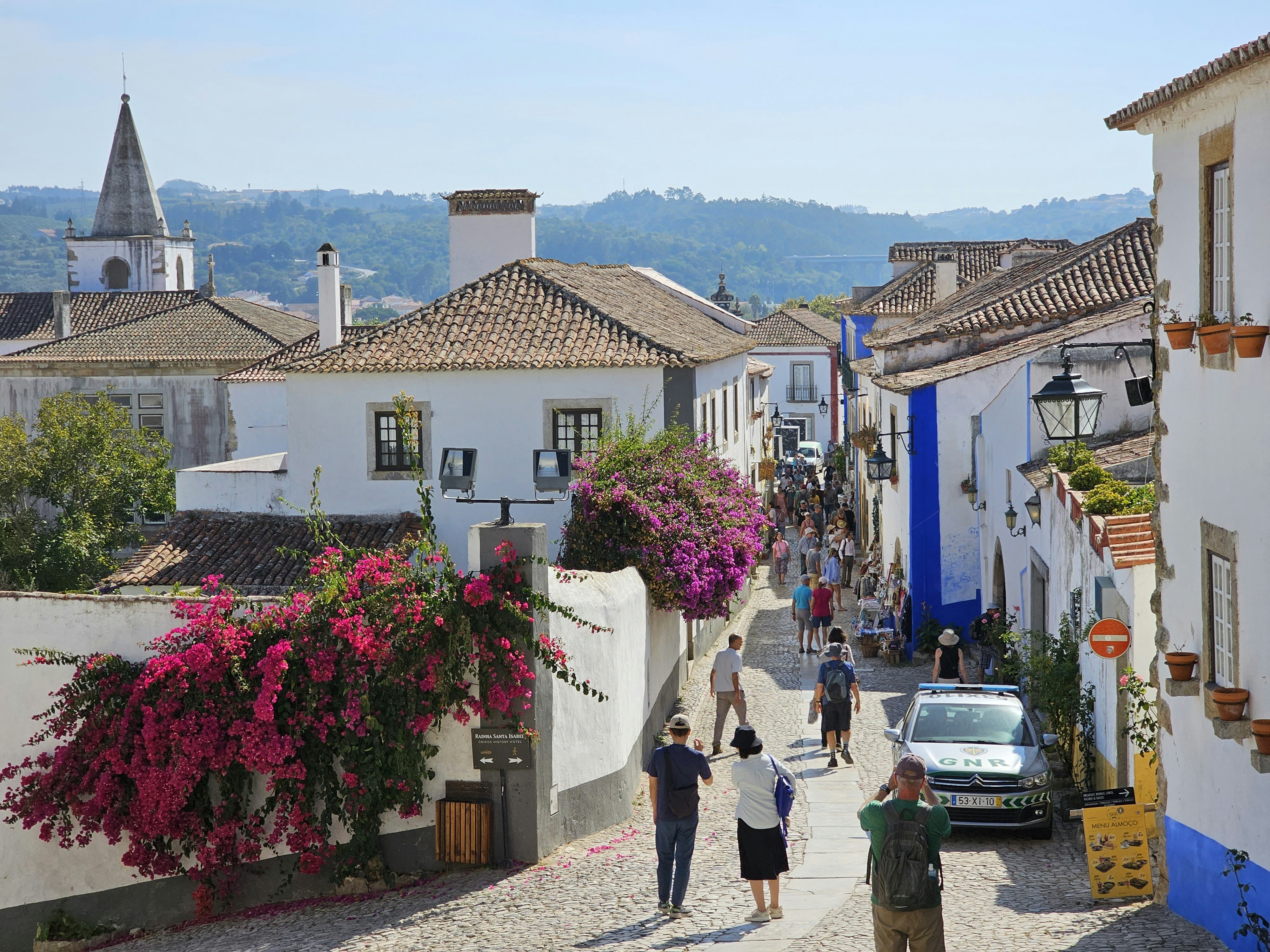
- Óbidos is a small town located on the Atlantic Coast of Portugal. The town’s origins can be traced back to an early Roman settlement. The area of the town is located on a hilltop, surrounded by a fortified wall. From its streets, squares, fortified wall and castle, the town remains as a well preserved example of medieval architecture. It is because of this that the town is a popular tourist destination.
- Fado is a popular style of music in Lisbon, Portugal. In Lisbon, fado is always sung by a solo performer, while in other regions of Portugal it is typically performed in a group. Fado can be traced back to the 1820s, but it is said to have much earlier origins.
Hotels
- Radisson Blu 1882 — Barcelona
- SH Valencia Palace — Valencia
- Barcelo Carmen — Granada
- NH Plaza de Armas — Seville
- Radisson RED — Madrid
- Vila Gale Collection — Elvas
- Iberostar Selection Lisboa — Lisbon
Details
- Tour Operator
- Collette
- Start City
- Barcelona
- End City
- Lisbon
- Duration (Days)
- 15
- Activity Level
- Level 3
What's Included
- 20 meals included
- Inter-tour flights included
- Barcelona is an enchanting seaside city with boundless culture, fabled architecture and a world-class drinking and dining scene. Barcelona's architectural treasures span 2,000-plus years. Towering temple columns, ancient city walls and subterranean stone corridors provide a window into Roman-era Barcino. Fast forward a thousand years to the Middle Ages by taking a stroll through the shadowy lanes of the Gothic quarter, past tranquil plazas and soaring 14th-century cathedrals. In other parts of town bloom the sculptural masterpieces of Modernisme, a mix of ingenious and whimsical creations by Gaudí and his Catalan architectural contemporaries for which this city is so well known. Barcelona has also long-inspired artists, including the likes of Salvador Dalí, Pablo Picasso and Joan Miró, whose works are in bold display in the city's myriad museums.
- La Sagrada Familia, the Holy Family, is a church of the people, built by the people, with the money of the people. While it is not the cathedral of Barcelona, it is widely known due to its unique architecture and phenomenal design initiated by architect Antoni Gaudí. Work on the exploratory church began in 1882 and continue to this day, but with modern technology and the rising number of visitors and donations, the church’s completion date has rapidly become closer. The facades of the church are breathtaking in their intricate and artistic details all of which were inspired by Gaudí. The church is divided into parts including the apse, chapels, cloister, crossing and transepts, crypt, glory façade, the nativity façade, the passion façade, the main nave and the sacristies.
- Valencia is the capital of the autonomous community of Valencia, Spain. It is the third largest city in Spain after Madrid and Barcelona. The city is located on the banks of the Turia River on the east coast of the Iberian Peninsula. Valencia was founded as a Roman colony in 138 B.C. Its historic center is one of the largest in Spain at 169 hectares in size. The region of Spain, specifically Valencia, is known for its paella: a rice dish native to the country of Spain.
- Paella is a type of rice dish originating in the Valencian region on the east coast of Spain. The dish is widely regarded as Spain’s national dish, however most Spaniards consider it to be the regional dish of Valencia. Valencian paella is considered to be the original recipe, even though there are several different kinds of paella. The Valencian dish is comprised of white rice, green vegetables, meat, land snails, beans and seasoning.
- Granada is the capital of the province of Granada in the autonomous community of Andalusia, Spain and sits at the foot of the Sierra Nevada Mountains at the intersection of four rivers. This city is only an hour from the Mediterranean Coast. Granada has been continuously inhabited by people for the past 2500 years, starting under Ancient Roman rule and features rich cultural elements, historic architecture, beautiful beaches and the snowy Sierra Nevada Mountains.
- The Alhambra is a palace and fortress complex located in Granada, Andalusia, Spain. The first palace on the site was built in the 11th century and in the 12th and 13th century a fortress-complex palace was built. It is a vast complex, comprised of many structures. The Alhambra is part fortress, part palace, part garden and part government city. Many visitors come to Grenada specifically just to visit and see the Alhambra.
- Seville is the capital and largest city of the autonomous community of Andalusia, Spain. Seville is the top destination in the Andalusia region for travelers. Approximately 2,200 years old, the early origins of the city date back to the year 712. It is situated on the Guadalquivir River which splits the city into two halves. Seville is famous for being the birthplace of the Flamenco dance. It is also known for its culture, monuments, traditions and artistic heritage.
- The heartbeat of Spain can be found in the houses of flamenco artists. A traditional flamenco show can be found in many of the small towns and cities scattered through the southern region of Spain, Andalusia. Flamenco is a style of dance encompassing the rhythm of lifestyle, personality and beauty of Spaniards. There is eminent beauty in every aspect of a Flamenco show from Andalusian décor, castanets, flamenco attire, polka dots, and the unforgettable strumming of the Spanish guitar. Flamenco is a type of Spanish folk music and dance originating in the region of Andalucía in southern Spain. It includes, singing, dancing, guitar playing and handclaps.
- Córdoba is located in Andalucía, southern Spain, and is the capital of the province of Córdoba. This city has an interesting history full of many diverse cultures and was the capital of a Roman province, the capital of an Arab State and a form of an Islamic government. It has the second largest old town in Europe, featuring Roman architecture, including a Roman bridge, as well as several Islamic and Jewish mosques.
- Madrid is the capital and the largest city in Spain. Madrid sits on the Manzanares River, just northeast of the center of the Iberian Peninsula. It is estimated that the origins of Madrid can be traced back to the 2nd century B.C. Madrid is home to the head of the Spanish government, the Spanish royal family and the headquarters of the World Tourism Organization. Madrid’s influence on politics, education, entertainment, fashion and culture make it one of the world’s major global cities.
- Stroll the halls and galleries inside the world-famous Prado Museum. On a guided tour, step back in time as you view its priceless collection of paintings and sculpture. Open since 1819, the Prado houses the works of legendary European artists from the 15th through early 19th centuries. Stand before the works of Velázquez and Goya, Spain’s greatest painters. Through their genius, gain insight into the rich culture surrounding you. Notable in the museum’s collection is Velázquez’s Las Meninas, one of the most important and studied paintings in the western tradition. Goya’s groundbreaking The Third of May 1808 also calls the Prado home. Whether you are an art aficionado or simply wish to explore the thrill of human expression, this is the perfect way to complete your visit to Madrid.
- Travel across the famous Alentejo region of southern Portugal, known for three things; pottery, wine, and cork. Sparsely populated, the Alentejo region is rolling green hills, orchards of sobreiro trees, and vineyards.
- Spread across steep hillsides that overlook the Rio Tejo, Lisbon offers all the delights you’d expect of Portugal’s star attraction, yet with half the fuss of other European capitals. Gothic cathedrals, majestic monasteries and quaint museums are all part of the colorful cityscape, but the real delights of discovery lie in wandering the narrow lanes of Lisbon’s lovely backstreets. The Lisbon experience encompasses so many things, from enjoying a fresh pastry and bica (espresso) on a petite leafy plaza to window-shopping in elegant Chiado. It’s mingling with Lisboêtas at a neighborhood festival or watching the sunset from the old Moorish castle.
- Óbidos is a small town located on the Atlantic Coast of Portugal. The town’s origins can be traced back to an early Roman settlement. The area of the town is located on a hilltop, surrounded by a fortified wall. From its streets, squares, fortified wall and castle, the town remains as a well preserved example of medieval architecture. It is because of this that the town is a popular tourist destination.
- Fado is a popular style of music in Lisbon, Portugal. In Lisbon, fado is always sung by a solo performer, while in other regions of Portugal it is typically performed in a group. Fado can be traced back to the 1820s, but it is said to have much earlier origins.
Pricing
| Option | Price | Departure | Return |
|---|---|---|---|
| Double | USD 5,999.00 | 2027-05-01 | |
| Single | USD 7,599.00 | 2027-05-01 | |
| Double | USD 5,999.00 | 2027-05-08 | |
| Single | USD 7,599.00 | 2027-05-08 | |
| Double | USD 5,999.00 | 2027-05-15 | |
| Single | USD 7,599.00 | 2027-05-15 | |
| Double | USD 5,999.00 | 2027-05-22 | |
| Single | USD 7,599.00 | 2027-05-22 | |
| Double | USD 5,799.00 | 2027-06-05 | |
| Single | USD 7,399.00 | 2027-06-05 | |
| Double | USD 5,799.00 | 2027-06-19 | |
| Single | USD 7,399.00 | 2027-06-19 | |
| Double | USD 5,199.00 | 2026-06-20 | |
| Single | USD 6,699.00 | 2026-06-20 | |
| Double | USD 5,599.00 | 2026-09-08 | |
| Single | USD 7,149.00 | 2026-09-08 | |
| Double | USD 5,599.00 | 2026-09-26 | |
| Single | USD 7,149.00 | 2026-09-26 | |
| Double | USD 5,599.00 | 2026-10-03 | |
| Single | USD 7,149.00 | 2026-10-03 | |
| Double | USD 5,599.00 | 2026-10-17 | |
| Single | USD 7,149.00 | 2026-10-17 | |
| Double | USD 4,999.00 | 2027-01-30 | |
| Single | USD 6,149.00 | 2027-01-30 | |
| Double | USD 4,999.00 | 2027-02-13 | |
| Single | USD 6,149.00 | 2027-02-13 | |
| Double | USD 5,199.00 | 2027-02-27 | |
| Single | USD 6,799.00 | 2027-02-27 | |
| Double | USD 5,799.00 | 2027-03-30 | |
| Single | USD 7,399.00 | 2027-03-30 | |
| Double | USD 5,999.00 | 2027-04-03 | |
| Single | USD 7,599.00 | 2027-04-03 | |
| Double | USD 5,999.00 | 2027-04-06 | |
| Single | USD 7,599.00 | 2027-04-06 | |
| Double | USD 5,999.00 | 2027-04-13 | |
| Single | USD 7,599.00 | 2027-04-13 | |
| Double | USD 5,999.00 | 2027-04-24 | |
| Single | USD 7,599.00 | 2027-04-24 | |
| Double | USD 4,999.00 | 2026-11-07 | |
| Single | USD 6,149.00 | 2026-11-07 |
Itinerary
-
Day 1: Overnight Flight
You're on your way to a colorful cultural adventure featuring the best of Spain and Portugal.
-
Day 2: Barcelona, Spain
Welcome to Spain! Today, arrive in the vibrant city of Barcelona. With no scheduled sightseeing today, spend the day as you wish, exploring the city independently. Tonight, meet your fellow travelers and enjoy a welcome dinner at a local restaurant.
-
Day 3: Barcelona
Start the morning by joining a local expert and exploring this amazing city as it was meant to be explored — on foot. Begin in the heart of Barcelona's Las Ramblas, enjoying the vibrant atmosphere of the city's most famous boulevard, which stretches from Plaça de Catalunya. Walk through the Gothic Quarter, a labyrinth of narrow, winding streets that date back to Roman times. Your local expert will guide you through this enchanting neighborhood, highlighting its hidden gems and sharing stories of its past. After some free time for lunch on your own, step inside the awe-inspiring La Sagrada Familia* (UNESCO) for a guided tour of the world-famous church designed by Catalan architect Antoni Gaudí.
-
Day 4: Barcelona - Peniscola - Valencia
Today, say goodbye to Barcelona! On your way to Valencia, stop in beautiful Peniscola and enjoy free time to explore on your own. Known as the “City in the Sea,” this fortified city and its Knights Templar Castle, dating back to the 13th century, are hidden gems. On a panoramic tour of Valencia, see the City of Arts and Sciences – an ultramodern educational institution. A treasure trove of Roman and Arabic architecture, Valencia is Spain’s third largest city, melding historic and modern culture.
-
Day 5: Valencia - Albufera - Valencia
Valencia is a city full of contrasts, where a charming old town lives next to futuristic buildings. Explore the city’s old quarter on foot, discovering its history with a local expert. View the ornate Serranos Towers before wandering through the bustling central market, where you can shop side-by-side with the locals. Travel to Albufera, which with its freshwater lake that evolved from an ancient marine gulf, is one of the most important wetlands in Spain. This is the area where paella originated – and the best place to experience it for lunch today. Enjoy time on your own to explore as you wish back in Valencia.
-
Day 6: Valencia - Granada
Today, make your way to Granada, the last great capital of the Moors in Spain before it fell to the Catholic monarchs in 1492. As the sun sets, the city bathes in a warm, golden light, highlighting the stunning architecture and historic landmarks. As the streets come alive for the evening, you may enjoy a leisurely stroll before dinner at a nearby restaurant.
-
Day 7: Granada - Seville
This morning, join a local expert for a tour of the world-famous Alhambra** (UNESCO), a stone fortress overlooking the entire city and serving as a mesmerizing example of Islamic architecture. As you enter this historical marvel, feel transported to a different era. Wander through the intricate Nasrid Palaces, the heart of the Alhambra, and lose yourself in the serene beauty of the Generalife Gardens and stunning views from the Alcazaba, the oldest part of the complex. After this captivating visit, continue to Seville, where you'll end the day in southern Spain’s cultural capital enjoying a delightful dinner.
-
Day 8: Seville
Embark on a panoramic tour before arriving at the iconic Plaza de España. Next, visit the Seville Cathedral*** (UNESCO) — the largest Gothic church in the world — and see Columbus’ tomb and the Giralda Bell Tower. Then decide how you want to continue because it’s your choice! Walk the Santa Cruz quarter with an expert guide, admiring the orange trees and white-washed houses -OR- get to know an example of the characteristic noble architecture at Palacio de Las Duenas. Then, enjoy some free time this afternoon. This evening, enjoy an authentic flamenco show (UNESCO) showcasing Seville's famous traditions.
-
Day 9: Seville - Córdoba - Madrid
Travel to the extraordinary Moorish city of Córdoba. Upon arrival, embark on a walking tour of La Mezquita (UNESCO), an 8th-century mosque that was converted into the city’s cathedral in the 16th century. As you continue your exploration of Córdoba's historical center, encounter a mix of Roman, Islamic, and Christian influences. The UNESCO World Heritage Site showcases a rich and diverse history, offering a fascinating journey through time with its unique blend of cultures and architectural styles. Then, board the two-hour AVE high-speed train to Spain’s capital city, Madrid! Arrive in the late afternoon with time to freshen up before gathering again for dinner.
-
Day 10: Madrid
During a locally guided tour of Madrid’s historic center, see iconic sites such as Plaza Mayor, where events have been held since the 17th century, and Plaza de Oriente — the square of the Royal Palace. Join a local expert to explore the priceless masterpieces of the Prado Museum, which opened in 1819 and boasts some of the world's finest collections of art by masters such as Velazquez and Goya. Your afternoon is free to further explore this fascinating city on your own or join an optional tour to Toledo to experience its rich cultural highlights, including the stunning cathedral.
-
Day 11: Madrid, Spain - Elvas, Portugal
Bid Spain adios and cross the border into Portugal, arriving in the off-the-beaten-path town of Elvas, a garrison town recognized as a World Heritage Site. On the way, indulge in full-bodied wines from the Alentejo region during a winery tour, tasting, and some petiscos – Portuguese traditional bites, usually shared with friends.
-
Day 12: Elvas - Lisbon
Make your way to Lisbon, the capital of Portugal. Meander through historic downtown, hearing the kinds of stories that bring the city — and its colorful neighborhoods — to life. Walk Praça do Comercio, one of the biggest squares in Europe. This gorgeous square flaunts colorful artwork and sculptures. Then, travel to Belém where you will visit Jerónimos Monastery**** (UNESCO) a prime example of Portuguese late Gothic architecture. This evening, over Portuguese cuisine and wine, listen to local artists perform the traditional fado (UNESCO).
-
Day 13: Lisbon
The day is yours! Discover the capital city on your own. Consider tasting the city’s mouthwatering cuisine or taking the historic tram to the vibrant Alfama district. Perhaps you’ll go on an optional excursion to the Portuguese Riviera, visiting the picturesque towns of Cascais and Sintra.
-
Day 14: Lisbon - Obidos - Lisbon
Today, visit one of Portugal’s most famed towns – Obidos! With its labyrinth of cobblestoned streets and whitewashed houses, this medieval town beckons you to linger and enjoy its charm. You may choose to try one of the local delicacies – sour cherry liquor served in chocolate cups – or simply enjoy the narrow streets and picture-perfect alleyways. Gather this evening for a farewell dinner celebrating the end of an unforgettable trip to Spain and Portugal.
-
Day 15: Lisbon - Tour Ends
Return home with memories of two warm cultures and of a beautiful land.