
Exploring the Alpine Countries Austria - Germany - Switzerland
Discover storybook castles and opulent palaces amidst stunning Alpine vistas as you explore Austria, Germany, and Switzerland. Visit Schönbrunn Palace in Vienna. Take a cruise along the legendary Danube. Stroll the quaint streets of Salzburg, the "City of Music." Spend two nights in the heart of the Black Forest. Visit Oberammergau, renowned for its 380-year tradition of producing a Passion Play every decade. Witness the beauty of Linderhof Palace and its perfectly decorated gardens. From Vienna and the Black Forest to the Swiss Alps and Lucerne, explore the heart of Europe.
Discover storybook castles and opulent palaces amidst stunning Alpine vistas as you explore Austria, Germany, and Switzerland. Visit Schönbrunn Palace in Vienna. Take a cruise along the legendary Danube. Stroll the quaint streets of Salzburg, the "City of Music." Spend two nights in the heart of the Black Forest. Visit Oberammergau, renowned for its 380-year tradition of producing a Passion Play every decade. Witness the beauty of Linderhof Palace and its perfectly decorated gardens. From Vienna and the Black Forest to the Swiss Alps and Lucerne, explore the heart of Europe.
Highlights
- This is the capital city of Austria, located on the Danube, with a population of over 2 million in the metro area. It is known as the “City of Music” because of the numerous famous composers who have lived and worked here, such as Mozart, Haydn, Beethoven and Brahms, and also as the “City of Dreams” as it was home to Sigmund Freud. Some of its primary sights are Schonbrunn Palace, Hofburg Palace, Opera House, Belvedere and St. Stephen’s Cathedral. Vienna is also known for its coffee houses and restaurants.
- This Vienna palace was a summer residence of the Holy Roman Emperors beginning in the 17th century, and is the most-visited site in Austria. Emperor Maximillian II bought the property for a hunting preserve, and it was remodeled by Empress Maria Theresa in the mid 18th century. On the grounds are an orangerie, a palm house, a French garden designed by a student of the designer of the gardens at Versailles in France, an English garden and a large park. Concerts are often held here with music of Mozart and others.
- In Vienna, Austria’s "capital of classical music," enjoy an after-dinner performance of opera and ballet to the music of Strauss, Mozart, and more. Vienna is a major destination for classical music lovers because of the many composers who hail from the city or flocked there to establish their musical careers through the 19th century.
- The cruise travels through the Wachau Valley, a UNESCO site running 25 miles from Melk to Krems in Lower Austria. The valley has been inhabited since prehistoric times and is a famous wine region. There are no bridges across the Danube in the valley, so ferries are the only way to cross, and the area has kept its character thanks to that. The town of Durnstein in the valley is where Duke Leopold held King Richard Lionheart of England captive.
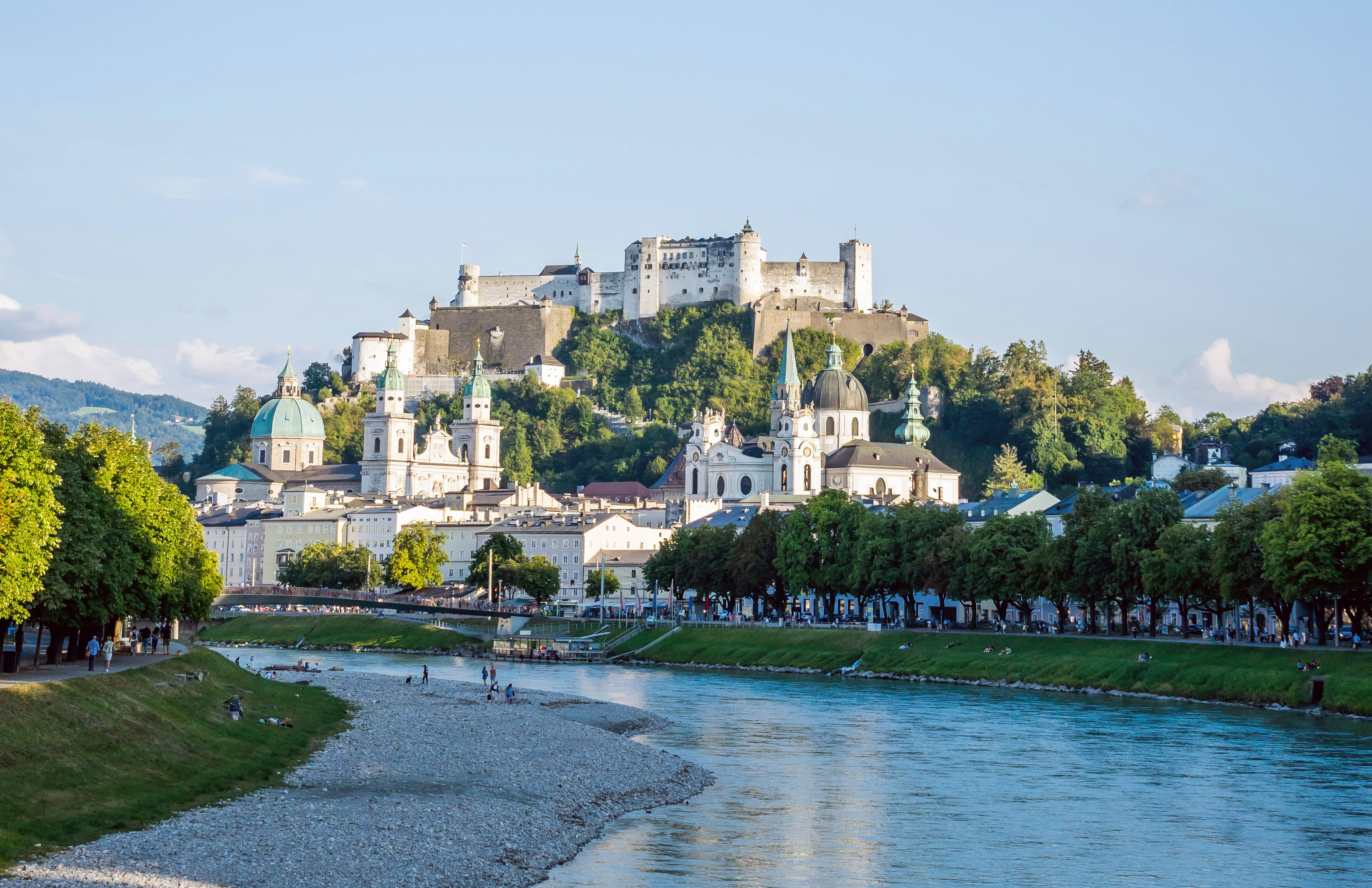
- The name of this city means “Salt Fortress” and it comes from the custom of taxing salt shipments down the Salzach River. It is the 4th largest city in Austria, and the capital of the state of Salzburg. The baroque Old Town is a UNESCO World Heritage site, and the city sits in a valley surrounded by the Alps. Mozart was born here in the 18th century, and the city was the setting for “The Sound of Music”. Salzburg became part of Austria in the early 19th century, given by Bavaria. Some of the important sights are the Salzburg Castle, Salzburg Cathedral, Mirabell Gardens, the birthplace of Mozart and sites associated with “The Sound of Music.”
- This is the 3rd largest city in Germany and capital of Bavaria, population about 1.5 million in the city itself. It began as the site of a Benedictine monastery where the old city is today, and the name of the city comes from the word “monk”. It is famous today as the home of Oktoberfest and the Hofbrauhaus, the Glockenspiel clock in the Old Town Hall, its Christmas Market and the headquarters of BMW and Siemens. There are several universities there and it was the site of the 1972 Summer Olympics.
- This German town of 5,100 people is located in the Bavarian Alps, very close to the Austrian border. It is most famous for the Passion Play, which takes place here every 10 years. It was first held in 1634 to give thanks for escaping the Bubonic Plague and is performed only by inhabitants of Oberammergau. Almost half of the villagers took part in the last play in 2010. The town is also known for traditional Alpine woodcarving and frescoes on house facades, so walking through the center is like being in a museum. Many shops sell examples of the woodcraft. During WWII, Messerschmitt aircraft were built here, partly in tunnels in the mountain behind the town. Now the German Army and the NATO School occupy the former Nazi barracks here.
- Inspired by Versailles and built by King Ludwig II of Bavaria in 1886, Linderhof Palace has a Baroque facade with rich Rococco ornamentation inside. The Palace is an excellent way to see the incomparable artistry of the era’s craftspeople. Look for such lush decorations as a carpet made of ostrich plumes, an ivory candelabra and a table top inlayed with lapis-lazuli, amethyst and chalcedony.
- This is a heavily forested mountain range in southwest Germany that lies east of the Rhine River and borders France on its west and Switzerland in the south. The highest peak in the 150 km-long (93 miles) region is about 1500 meters/4,900 feet, and there are several beautiful glacial lakes within the forest, such as Titisee and Feldsee. The famous spa town of Baden-Baden is in the northern part of the forest, and there are numerous hiking trails and driving circuits to visit the traditional villages. The Black Forest is known for wood-carving, especially in the manufacture of cuckoo clocks, and for foods like Black Forest ham and Black Forest Cherry cake.
- This city of 80,000 people is in north-central Switzerland in the canton of Lucerne and sits on the shores of Lake Lucerne. The town began with a Benedictine monastery in the 8th century and gained importance from its location on trade routes. The most famous sights in Lucerne are the wooden Kapellbrucke (Chapel Bridge) across the Reuss River, the Hofkirche (Church of St. Leodegar) and the Swiss Museum of Transport. The city celebrates Carnival every year beginning the Thursday before Ash Wednesday. Mt Pilatus, with the world’s steepest cog railway, is visible from Lucerne.
Hotels
- Imperial Riding School Autograph Collection — Vienna
- NH Collection Salzburg City Hotel — Salzburg
- Hotel Alte Post — Oberammergau
- Hofgut Sternen — Titisee
- Hotel Astoria — Lucerne
Details
- Tour Operator
- Collette
- Start City
- Vienna
- End City
- Lucerne
- Duration (Days)
- 12
- Activity Level
- Level 3
What's Included
- 16 meals included
- This is the capital city of Austria, located on the Danube, with a population of over 2 million in the metro area. It is known as the “City of Music” because of the numerous famous composers who have lived and worked here, such as Mozart, Haydn, Beethoven and Brahms, and also as the “City of Dreams” as it was home to Sigmund Freud. Some of its primary sights are Schonbrunn Palace, Hofburg Palace, Opera House, Belvedere and St. Stephen’s Cathedral. Vienna is also known for its coffee houses and restaurants.
- This Vienna palace was a summer residence of the Holy Roman Emperors beginning in the 17th century, and is the most-visited site in Austria. Emperor Maximillian II bought the property for a hunting preserve, and it was remodeled by Empress Maria Theresa in the mid 18th century. On the grounds are an orangerie, a palm house, a French garden designed by a student of the designer of the gardens at Versailles in France, an English garden and a large park. Concerts are often held here with music of Mozart and others.
- In Vienna, Austria’s "capital of classical music," enjoy an after-dinner performance of opera and ballet to the music of Strauss, Mozart, and more. Vienna is a major destination for classical music lovers because of the many composers who hail from the city or flocked there to establish their musical careers through the 19th century.
- The cruise travels through the Wachau Valley, a UNESCO site running 25 miles from Melk to Krems in Lower Austria. The valley has been inhabited since prehistoric times and is a famous wine region. There are no bridges across the Danube in the valley, so ferries are the only way to cross, and the area has kept its character thanks to that. The town of Durnstein in the valley is where Duke Leopold held King Richard Lionheart of England captive.
- The name of this city means “Salt Fortress” and it comes from the custom of taxing salt shipments down the Salzach River. It is the 4th largest city in Austria, and the capital of the state of Salzburg. The baroque Old Town is a UNESCO World Heritage site, and the city sits in a valley surrounded by the Alps. Mozart was born here in the 18th century, and the city was the setting for “The Sound of Music”. Salzburg became part of Austria in the early 19th century, given by Bavaria. Some of the important sights are the Salzburg Castle, Salzburg Cathedral, Mirabell Gardens, the birthplace of Mozart and sites associated with “The Sound of Music.”
- This is the 3rd largest city in Germany and capital of Bavaria, population about 1.5 million in the city itself. It began as the site of a Benedictine monastery where the old city is today, and the name of the city comes from the word “monk”. It is famous today as the home of Oktoberfest and the Hofbrauhaus, the Glockenspiel clock in the Old Town Hall, its Christmas Market and the headquarters of BMW and Siemens. There are several universities there and it was the site of the 1972 Summer Olympics.
- This German town of 5,100 people is located in the Bavarian Alps, very close to the Austrian border. It is most famous for the Passion Play, which takes place here every 10 years. It was first held in 1634 to give thanks for escaping the Bubonic Plague and is performed only by inhabitants of Oberammergau. Almost half of the villagers took part in the last play in 2010. The town is also known for traditional Alpine woodcarving and frescoes on house facades, so walking through the center is like being in a museum. Many shops sell examples of the woodcraft. During WWII, Messerschmitt aircraft were built here, partly in tunnels in the mountain behind the town. Now the German Army and the NATO School occupy the former Nazi barracks here.
- Inspired by Versailles and built by King Ludwig II of Bavaria in 1886, Linderhof Palace has a Baroque facade with rich Rococco ornamentation inside. The Palace is an excellent way to see the incomparable artistry of the era’s craftspeople. Look for such lush decorations as a carpet made of ostrich plumes, an ivory candelabra and a table top inlayed with lapis-lazuli, amethyst and chalcedony.
- This is a heavily forested mountain range in southwest Germany that lies east of the Rhine River and borders France on its west and Switzerland in the south. The highest peak in the 150 km-long (93 miles) region is about 1500 meters/4,900 feet, and there are several beautiful glacial lakes within the forest, such as Titisee and Feldsee. The famous spa town of Baden-Baden is in the northern part of the forest, and there are numerous hiking trails and driving circuits to visit the traditional villages. The Black Forest is known for wood-carving, especially in the manufacture of cuckoo clocks, and for foods like Black Forest ham and Black Forest Cherry cake.
- This city of 80,000 people is in north-central Switzerland in the canton of Lucerne and sits on the shores of Lake Lucerne. The town began with a Benedictine monastery in the 8th century and gained importance from its location on trade routes. The most famous sights in Lucerne are the wooden Kapellbrucke (Chapel Bridge) across the Reuss River, the Hofkirche (Church of St. Leodegar) and the Swiss Museum of Transport. The city celebrates Carnival every year beginning the Thursday before Ash Wednesday. Mt Pilatus, with the world’s steepest cog railway, is visible from Lucerne.
Pricing
| Option | Price | Departure | Return |
|---|---|---|---|
| Double | USD 4,999.00 | 2026-06-11 | |
| Single | USD 6,199.00 | 2026-06-11 | |
| Triple | USD 4,899.00 | 2026-06-11 | |
| Double | USD 4,999.00 | 2026-07-09 | |
| Single | USD 6,199.00 | 2026-07-09 | |
| Triple | USD 4,899.00 | 2026-07-09 | |
| Double | USD 4,999.00 | 2026-08-06 | |
| Single | USD 6,199.00 | 2026-08-06 | |
| Triple | USD 4,899.00 | 2026-08-06 | |
| Double | USD 4,999.00 | 2026-08-27 | |
| Single | USD 6,199.00 | 2026-08-27 | |
| Triple | USD 4,899.00 | 2026-08-27 | |
| Double | USD 5,399.00 | 2026-09-12 | |
| Single | USD 6,599.00 | 2026-09-12 | |
| Triple | USD 5,099.00 | 2026-09-12 | |
| Double | USD 5,399.00 | 2026-09-19 | |
| Single | USD 6,599.00 | 2026-09-19 | |
| Triple | USD 5,099.00 | 2026-09-19 | |
| Double | USD 4,999.00 | 2027-04-22 | |
| Single | USD 6,199.00 | 2027-04-22 | |
| Triple | USD 4,899.00 | 2027-04-22 | |
| Double | USD 5,199.00 | 2027-05-08 | |
| Single | USD 6,399.00 | 2027-05-08 | |
| Triple | USD 5,099.00 | 2027-05-08 | |
| Double | USD 5,199.00 | 2027-05-13 | |
| Single | USD 6,399.00 | 2027-05-13 | |
| Triple | USD 5,099.00 | 2027-05-13 | |
| Double | USD 5,199.00 | 2027-05-20 | |
| Single | USD 6,399.00 | 2027-05-20 | |
| Triple | USD 5,099.00 | 2027-05-20 | |
| Double | USD 5,199.00 | 2027-05-22 | |
| Single | USD 6,399.00 | 2027-05-22 | |
| Triple | USD 5,099.00 | 2027-05-22 | |
| Double | USD 5,199.00 | 2027-06-03 | |
| Single | USD 6,399.00 | 2027-06-03 | |
| Triple | USD 5,099.00 | 2027-06-03 | |
| Double | USD 5,199.00 | 2027-06-10 | |
| Single | USD 6,399.00 | 2027-06-10 | |
| Triple | USD 5,099.00 | 2027-06-10 | |
| Double | USD 5,199.00 | 2027-06-17 | |
| Single | USD 6,399.00 | 2027-06-17 | |
| Triple | USD 5,099.00 | 2027-06-17 | |
| Double | USD 5,199.00 | 2027-06-24 | |
| Single | USD 6,399.00 | 2027-06-24 | |
| Triple | USD 5,099.00 | 2027-06-24 |
Itinerary
-
Day 1: Overnight Flight
From regal Austrian palaces to handcrafted German clocks and snowcapped Swiss Alps, set out to experience three Alpine cultures set amid postcard-worthy landscapes.
-
Day 2: Vienna, Austria
Welcome to Vienna, Austria’s stately capital city. Built by the Habsburg Empire and amplified by classical composers, Vienna exudes an old-world charm that can be found in its cobblestone streets and elegant architecture. As arrival times will vary, there is no scheduled sightseeing today. Spend the day as you wish, exploring the city independently. This evening, meet your fellow travelers at a welcome dinner in the city.
-
Day 3: Vienna
Come to know Vienna this morning in the company of a local guide. Begin with a visit to the 17th-century Schönbrunn Palace, containing more than 1,440 rooms. Next, a panoramic city tour followed by a guided walk highlights views of the city’s architectural marvels from Hofburg to St. Stephen's Cathedral. The afternoon is yours. Enjoy free time to explore the avenues of Vienna or perhaps visit one of its many museums. In the evening, enjoy a performance by opera singers and ballet dancers set to the music of Strauss, Mozart, and more.
-
Day 4: Vienna - Salzburg
Journey through the countryside before taking a cruise along the Danube,* one of Europe’s most renowned waterways. Continue to Salzburg, the “City of Music,” and find lush gardens and old-world charm. Dine on Austrian cuisine at a local restaurant.
-
Day 5: Salzburg
Choose how you spend your morning because it’s your choice! Discover Salzburg on a leisurely paced walking tour of the Old Town -OR- feel like you’ve joined the Von Trapp family on a city tour featuring some of the iconic film locations from The Sound of Music. No matter how you choose to spend the morning, enjoy an afternoon at leisure to explore the beloved town on your own, or perhaps you’ll choose to join the optional tour to the Eagle’s Nest**.
-
Day 6: Salzburg - Munich - Oberammergau, Germany
Look out upon the Bavarian Alps en route to the most popular Bavarian city, Munich. Upon arrival, it’s your choice! Take a panoramic tour of Munich, highlighting the National Theater of Bavaria and much more -OR- visit the lavish Treasury of the Munich Residence. Both choices end with a viewing of the Rathaus – Glockenspiel chiming at Marienplatz. Continue on to Oberammergau, renowned for its 380-year tradition of producing a Passion Play every 10 years, and your home for the next two nights.
-
Day 7: Oberammergau - Ettal - Oberammergau
Tour Linderhof Palace, the only palace out of three that King Ludwig II lived to see completed. Walk the extraordinary halls that were modeled after Versailles with an expert guide and bask in the luxury of past royals. Along the way, stop for an iconic view of Bavaria’s most famous castle, Neuschwanstein, perched high on a hill in the distance. Regarded as the most photographed castle in Germany it was the inspiration for the castle in Sleeping Beauty.
-
Day 8: Oberammergau - Black Forest
You’re off to the heart of the Black Forest, a region famous for artisans who create authentic cuckoo clocks and Hummels. End your day trying the region’s famous black forest cake with the tree-studded mountains as your backdrop.
-
Day 9: Black Forest - Freiburg - Black Forest
This morning, hop on the train and journey to Freiburg, a vibrant city in southwest Germany’s Black Forest region. With a local guide by your side, explore Freiburg, a city with a rich medieval flair including its Gothic cathedral at the center of town and Bächle -- narrow channels with flowing water alongside the roads that once acted as a water supply for the town. Before returning to your hotel, stop at Lake Titisee and enjoy a short boat ride to take in the Black Forest scenery from a different perspective.
-
Day 10: Black Forest - Zurich, Switzerland - Lucerne
Enjoy a scenic drive through the Black Forest region before arriving to Zurich, Switzerland’s luxurious cultural hotspot, also known as a global leader in banking and finance. Join a local guide for a tour of the city on foot, and then enjoy some free time to have lunch on your own in Zurich. After, head to Lucerne, the “Swiss Paradise on the Lake.” Upon arrival, set out on a scenic walking tour of the city, including a stroll through its romantic Old Town.
-
Day 11: Lucerne
The day is yours to relax or independently explore the best of Lucerne. Perhaps you will embark on an optional excursion to Mount Pilatus, ascending the world’s steepest railway on a panoramic gondola to the summit. Tonight, come together with your fellow travelers for a farewell dinner featuring local specialties and toast the end of a wonderful trip.
-
Day 12: Lucerne - Tour Ends
Wish the Alps goodbye as your tour comes to a close today.